
As an Amazon Associate I earn from qualifying purchases. This post contains affiliate links, which means I may earn a small commission at no additional cost to you.
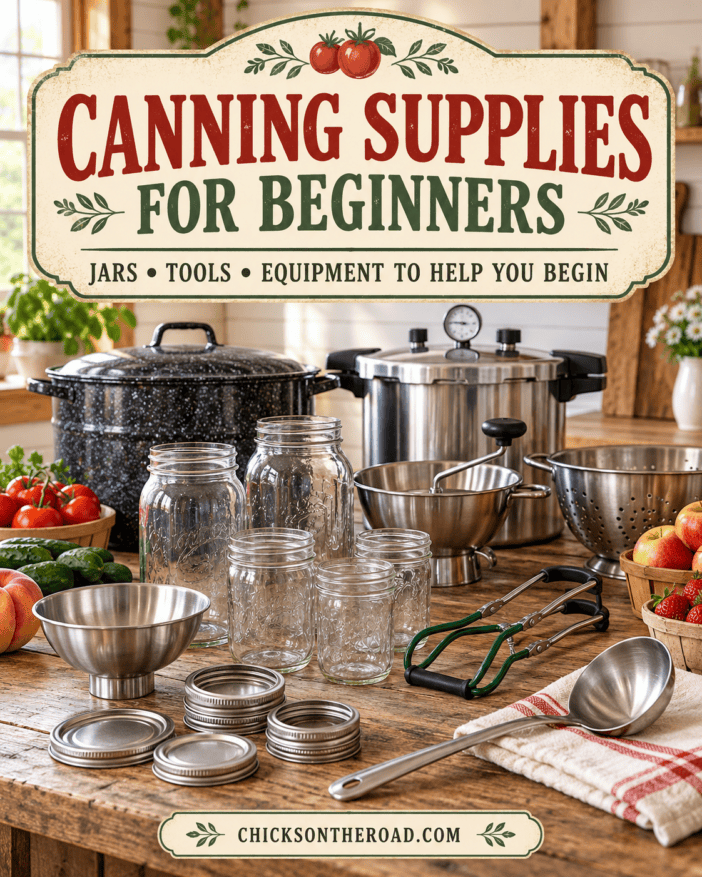
There is something wonderfully old-fashioned about lining up clean jars, setting a big pot on the stove, and preserving food for another season. But if you are new to canning, the equipment aisle can quickly become confusing. Which tools are essential? Which jars should you buy? And do you need a water-bath canner or a pressure canner?
This guide brings the basics together in one place. Whether you hope to make jam, pickles, tomato sauce, fruit, vegetables, or soup, you can begin with the right equipment and add to your collection as your confidence grows.
Before You Choose a Canner
There are two primary methods of home canning, and they are not interchangeable.
Water-bath canning is used for high-acid and properly acidified foods, including many fruits, jams, jellies, pickles, and tested tomato recipes.
Pressure canning is required for low-acid foods such as vegetables, meats, poultry, seafood, and many soups. A small pressure cooker or multicooker is not a substitute for a pressure canner.
Always follow a current, laboratory-tested recipe from a trusted source. The recipe—not personal preference—determines the correct canning method, jar size, headspace, processing time, and any necessary altitude adjustment.
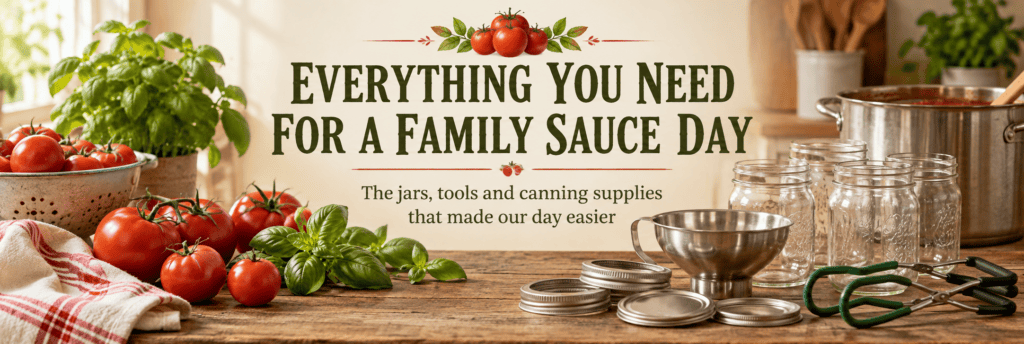
A1s an Amazon Associate, I earn from qualifying purchases. These are the basic supplies that helped us keep our family sauce day organized and moving.
Beginning Canning Supplies
As an Amazon Associate, I earn from qualifying purchases. These are helpful tools and supplies for preparing tomatoes, filling jars and processing your harvest. You do not need everything on this list to begin—choose the supplies that fit the way you plan to preserve your food.
Presto 23-Quart Pressure Canner and Cooker
A pressure canner is used for properly processing low-acid foods when a tested recipe requires pressure canning. Always follow the manufacturer’s instructions and a current, tested canning recipe.
View the Presto Pressure Canner on Amazon →
Granite Ware Water-Bath Canning Starter Kit
If you are beginning from scratch, this eight-piece set combines a water-bath canner, canning rack, funnel, jar lifter and several smaller tools in one starter kit.
View the Granite Ware Canning Starter Kit on Amazon →
Fruit and Vegetable Strainer Attachment
This KitchenAid stand-mixer attachment helps remove seeds and skins while turning cooked tomatoes into a smoother sauce.
View the KitchenAid Strainer Attachment on Amazon →
Four-Disc Food Mill
A hand-operated food mill is another useful option for making tomato sauce, fruit purées, jams and other smooth foods without using a stand mixer.
View the Hungry Artisan Food Mill on Amazon →
32-Ounce Wide-Mouth Mason Jars
Quart-size jars work well for larger batches of tomato sauce. The wide opening makes them easier to fill with thicker foods.
View the 32-Ounce Mason Jars on Amazon →
16-Ounce Mason Jars
Pint jars are useful when you want smaller portions for everyday meals, gifts or households that may not need a full quart at one time.
View the 12-Pack of Pint Jars on Amazon →
Eight-Ounce Mason Jars
Half-pint jars are handy for jams, jellies, relishes, sauces and small homemade gifts.
View the 24-Pack of Half-Pint Jars on Amazon →
Large Stainless-Steel Colanders
Large, footed colanders give you plenty of room to wash and drain tomatoes. They are especially helpful when processing a large garden harvest.
View the Two-Pack of Large Colanders on Amazon →
Large Stainless-Steel Ladle
A long-handled ladle with a pouring spout helps transfer hot sauce or cooking liquid into jars with better control.
View the Large Pouring Ladle on Amazon →
Spider Strainer Skimmer
A long-handled spider strainer makes it easier to lift tomatoes from boiling water during blanching while allowing the hot water to drain away.
View the Anaeat Spider Strainer on Amazon →
Stainless-Steel Skimmer Spoon
This slotted skimmer is another option for lifting tomatoes, vegetables or other foods from hot water.
View the Stainless-Steel Skimmer on Amazon →
Kraft Mason-Jar Labels
These round kraft-paper labels provide an attractive place to record the contents and canning date on finished jars.
View the Mason-Jar Labels on Amazon →
Cooling Racks
Cooling racks provide a protected place for processed jars to rest undisturbed while leaving room for air to circulate around them.
View the Two-Pack of Cooling Racks on Amazon →
The All New Ball Book of Canning and Preserving
This book includes more than 350 recipes for canned foods, jams, pickles and other preserves. It is a useful resource for both beginning and experienced home canners.
View the Ball Book of Canning and Preserving on Amazon →
Regular-Mouth Lids and Bands
Keep new lids and extra bands available before canning day begins. These are designed for regular-mouth canning jars.
View Regular-Mouth Lids and Bands on Amazon →
Wide-Mouth Lids and Bands
These lids and bands fit wide-mouth canning jars. Having extras ready keeps the work moving when you are filling several batches.
View Wide-Mouth Lids and Bands on Amazon →
20-Quart Stainless-Steel Canning Pot
A large stainless-steel stockpot provides room for cooking or water-bath canning larger batches. Check the pot’s dimensions against your jars and stove before purchasing.
View the 20-Quart Canning Pot on Amazon →
Follow the Family Tomato Sauce Day Series
Want to see how these supplies fit into an actual family Sauce Day? Follow our journey from the first idea to fourteen quarts of homemade tomato sauce:
Part 1: Starting a New Family Tradition →
Discover why we decided to create our own family Sauce Day and how the tradition began.

About the Author
Sherri holds an AA in Anthropology, a BA in History and Religious Studies from Albright College, and an MA in Ministry Leadership from Capital Seminary & Graduate School. She is the founder of Chicks on the Road Publishing, where she creates faith-filled resources designed to encourage women in their walk with Christ, their homes, and their family legacy.
Through storytelling, Bible studies, journals, devotionals, and memory-keeping projects, Sherri hopes to inspire others to live intentionally, preserve what matters most, and pass their faith to the next generation.
Creating from anywhere. Encouraging everywhere.