
From The Stories You Gave Me
My father was not a fisherman.
He made that perfectly clear to his Sunday School class one Sunday morning in August of 1999.
“I am not a fisherman,” he told them, before admitting that he owned a small amount of fishing tackle that seldom got used.
But that morning, Dad had brought a fishing rod to church.
It was old even then, perhaps thirty years old or more, and it had belonged to someone I loved very much.
My grandfather.
Jan Koolman.
Grandaddy.
Dad was teaching from the eighth chapter of Acts on this particular morning, the story of Philip and the Ethiopian eunuch. His lesson was called The Seeker’s Reward, and Dad needed an attention getter.
He often did that.
He would take some ordinary object—a tool, a household item, something from the garage or something he’d picked up along the way—and use it to lead his class toward a larger truth.
That Sunday, he chose an old fishing rod.
But before Dad could use it to talk about becoming “fishers of men,” he told his class about the man who had owned it.
“Julie’s dad’s name was John,” Dad began. “And when he wasn’t farming, boy did he love to fish.”
I can almost hear Dad saying it.
And I can see Grandaddy.
The Man Beside the Water
Grandaddy was a farmer, although I have come to understand that his life was much more complicated than the word farmer suggests.
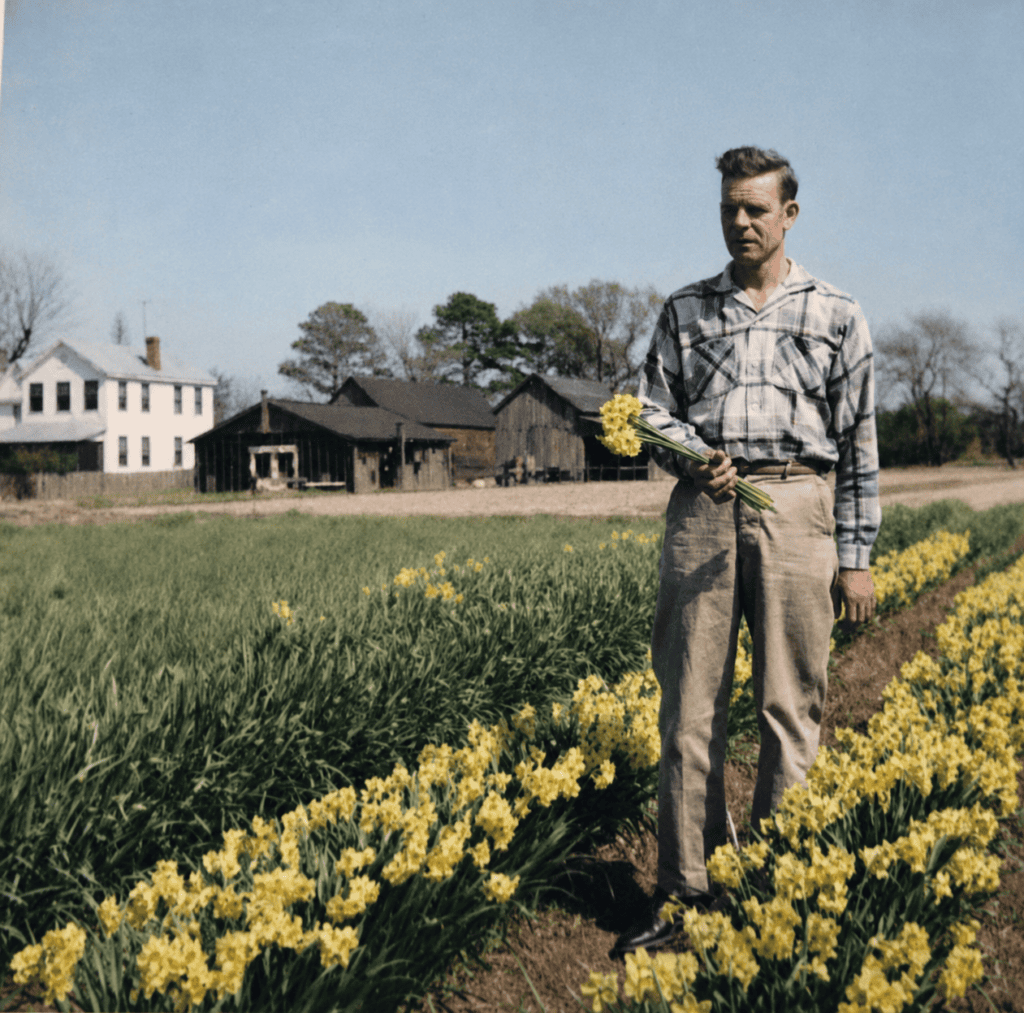
He was born Jan Koolman in Sassenheim, Holland. His mother died in childbirth when he was young, and family stories tell of difficult years afterward with a stepmother who was not always kind to him and his siblings.
Then, in 1925, while still a teenager, Jan did something that is almost impossible for me to imagine.
He crossed the Atlantic alone.
He left Amsterdam aboard a ship, came through Ellis Island, and began a new life in America. He came as a bulb salesman, carrying with him his Dutch language, his beautiful accent, his intelligence, and whatever hopes a teenage boy must have carried across that enormous ocean.
Eventually, America became home.
He married my grandmother and spent much of his life working the family farm where she had grown up. They lived there with her father and stepmother, and my grandparents would remain in that farmhouse until Grandaddy became ill in 1978.
Looking backward now, I sometimes wonder if Grandaddy felt constrained by some of the circumstances of his life. He was an intelligent man. I wonder what he imagined his American life might become when he boarded that ship in Amsterdam.
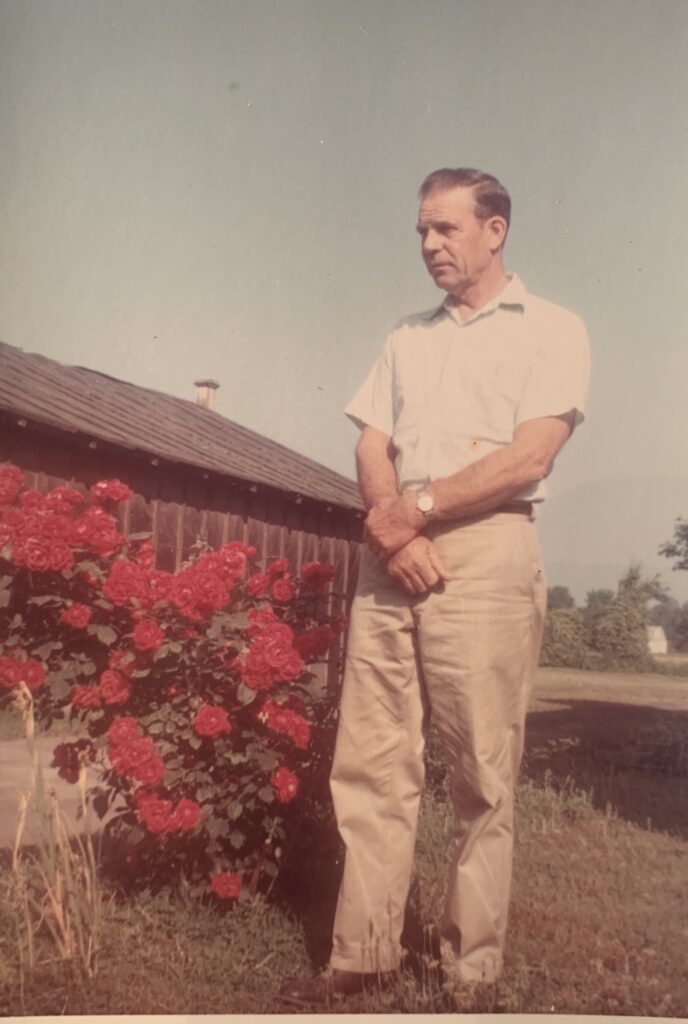
I don’t know.
And I don’t want to put dreams into his heart simply because I wish I could ask him about them now.
What I do know is that he worked hard.
Dad remembered that too.
And Dad remembered what Grandaddy did at the end of those hard days.
As often as he could, he went fishing.
Behind the farmhouse was a tidal basin. It was nothing like the canal lined with boathouses and boats that exists there today. In my childhood, I remember it as a muddy, tidal ditch bank behind the farm.
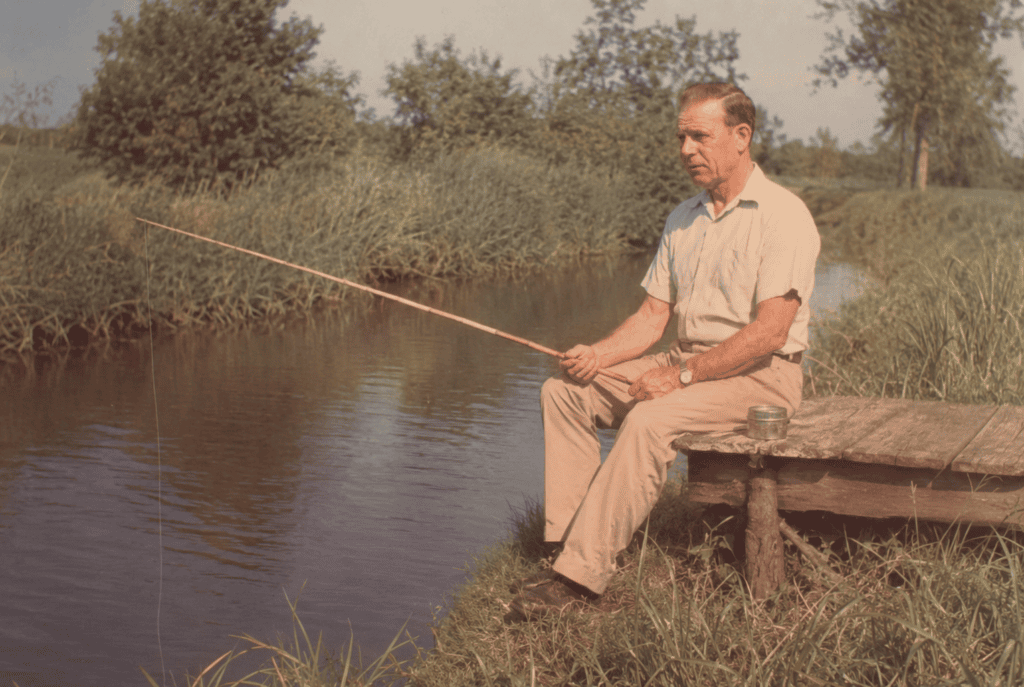
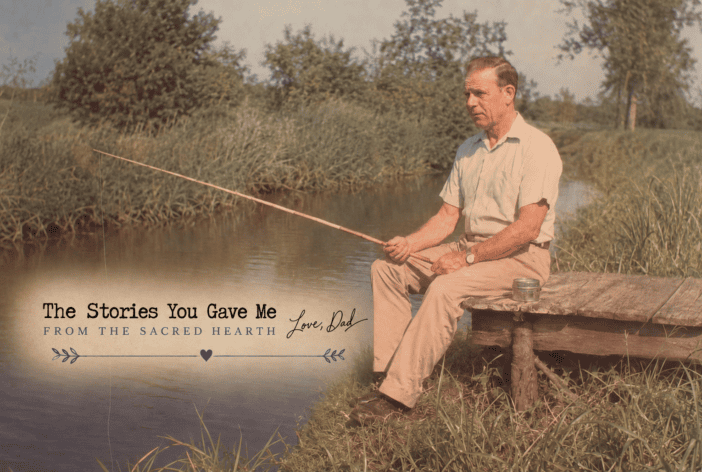
Dad remembered Grandaddy taking an old cane pole and sitting on a culvert over that water.
Sometimes he caught something.
Many times, Dad said, he caught nothing at all.
And apparently Grandaddy didn’t much care.
Dad wrote that he seemed perfectly content just to sit there with a worm hanging in the water and relax.
The older I get, the more I understand that kind of fishing.
Maybe catching a fish wasn’t always the point.
When the Tide Was Right
Grandaddy was a real fisherman.
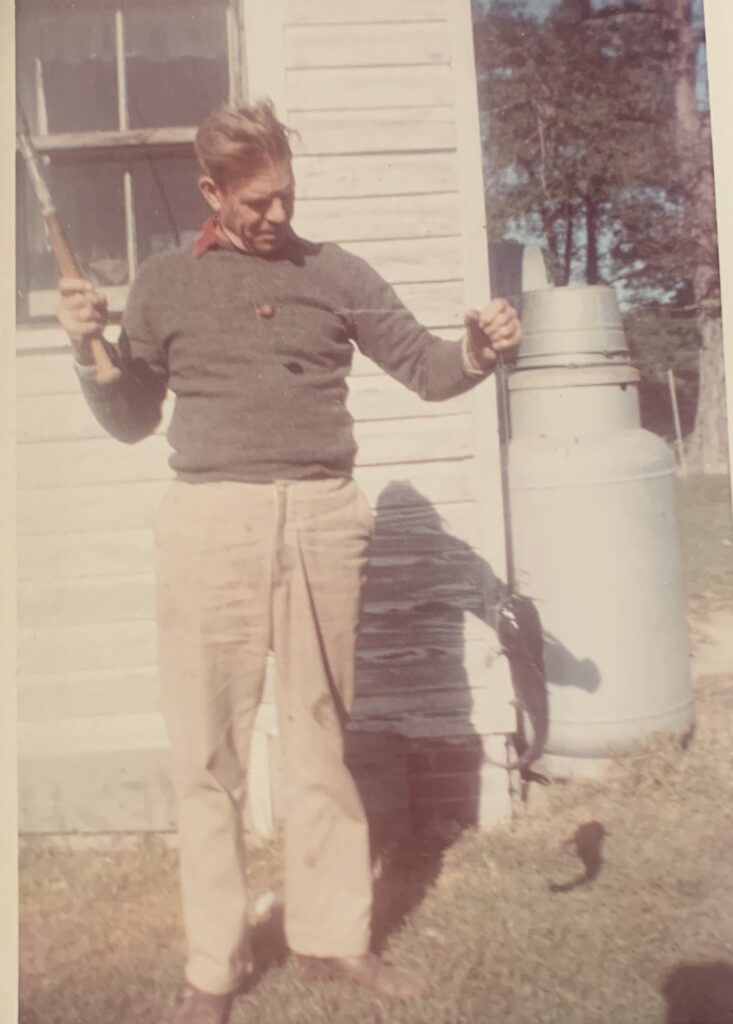
Not the sort who needed fancy equipment. He understood tides and places and patience.
Sometimes the tide was right at ten o’clock at night.
So that was when you went fishing.
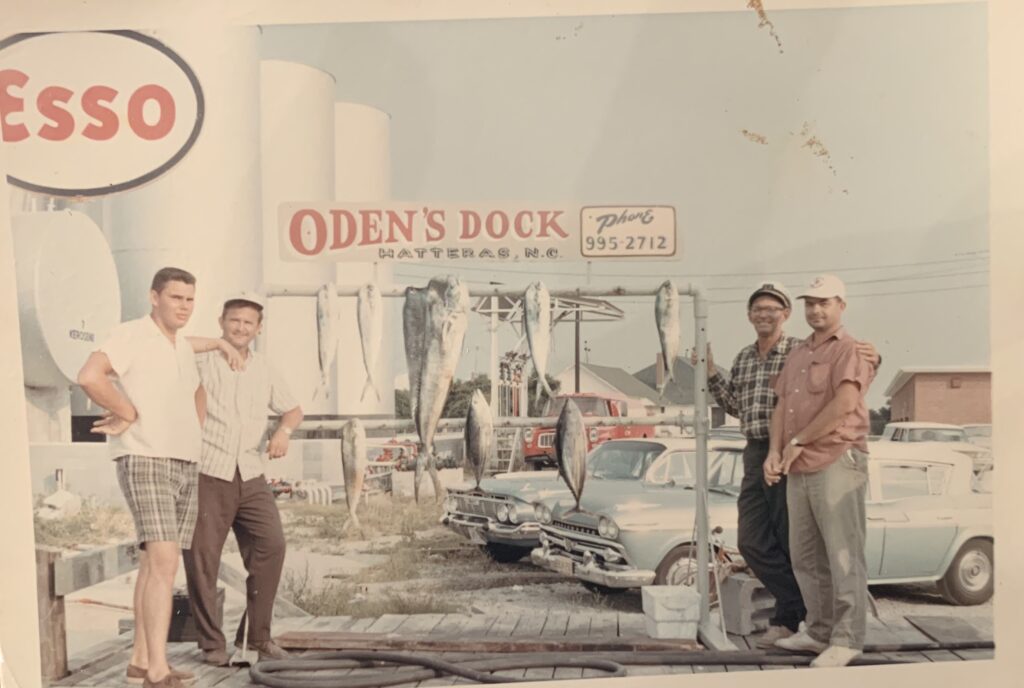
He fished from the piers around Hampton Roads—Ocean View and Lynnhaven among them. Lynnhaven was near the place where the Chesapeake Bay and Atlantic waters came together, near Fort Story. Ocean View offered calmer water.
Sometimes he went out on the bay in a rented rowboat with a friend named Mr. Wellins.
Grandaddy couldn’t swim.
Whether there were life jackets involved in these excursions is questionable at best.
When he fished from a pier, he used a rod and reel.
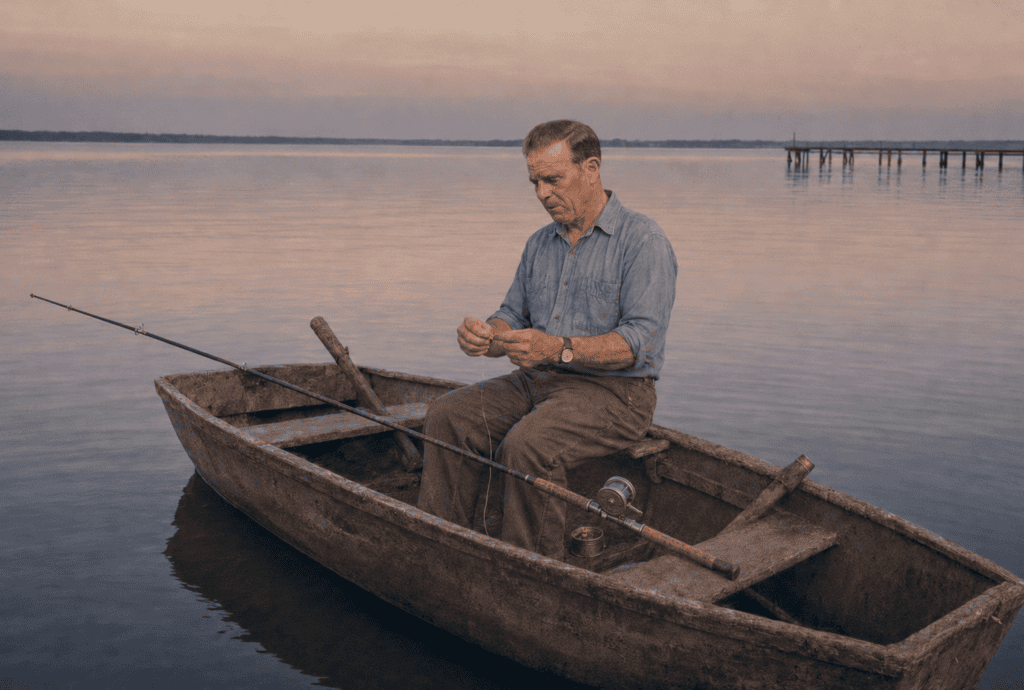
From a rowboat, sometimes all he needed was a line, a hook and a worm.
Spot and croaker were among the fish they caught.
And Grandaddy was apparently alone in his enthusiasm for all of this.
Mamaw didn’t fish.
Her parents didn’t fish.
Grandaddy fished.
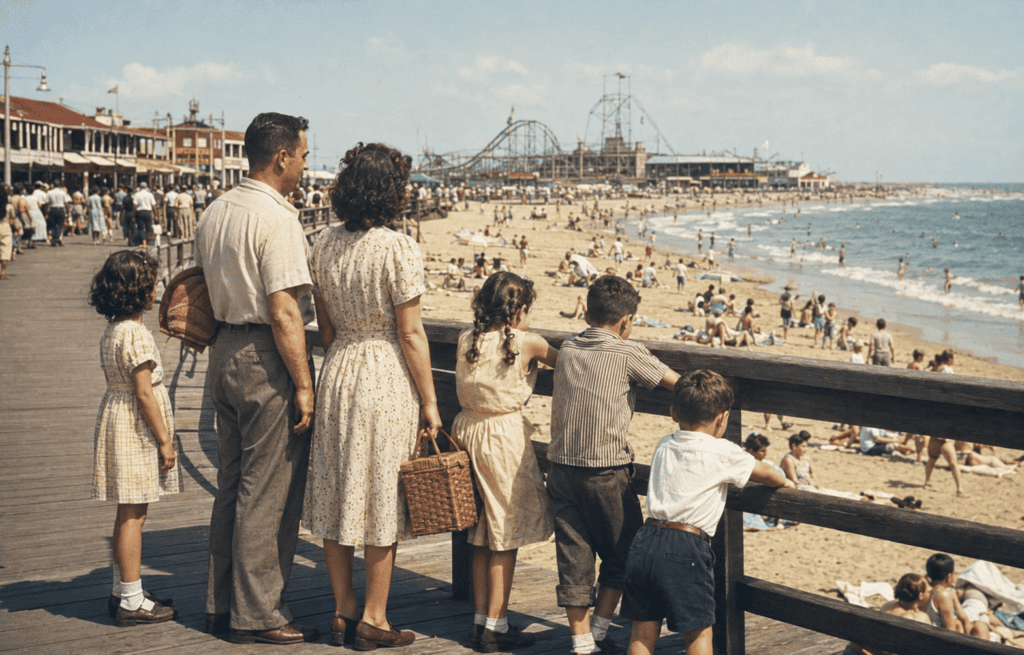
Every year around the end of August, Mamaw’s extended family gathered at Ocean View in Norfolk, Virginia for a picnic.
This was an era when someone could put homemade benches in the back of a truck, pile the children and grandchildren onto them, and drive everybody to the water without anyone giving it much thought.
Mamaw made fried chicken. Which meant, according to family memory, everyone was usually late.
There would be fish and potato salad and that fried chicken sitting out during the day, protected from whatever dangers lurked nearby by the formidable food-safety technology of the era: a tablecloth.
And everyone survived.
Those picnics happened year after year.
Until they didn’t.
As my uncle remembers it, as the years passed, that sort of thing simply died away.
That’s how so many family traditions end.
There is rarely an announcement that says, This will be the last time.
Nobody stands beside the picnic table and tells you to look carefully because someday you will wish you could come back.
You eat the chicken.
The children run around.
Someone complains that you’re late.
Grandaddy wishes someone would go fishing with him.
And everyone assumes there will be another August picnic.
Note: The wooden roller coaster visible in this interpretive memory image was called the Skyrocket, later known as The Rocket. Long after Mamaw’s family picnics, it was destroyed during the making of the 1979 television movie The Death of Ocean View Park. The place where generations gathered eventually disappeared—but the family stories remained.
The Grandaddy I Knew
My mother was the baby of the family.
Her brother and sister were roughly a decade older than she was, which meant that they knew a younger version of their father than she did.
And by the time I came along, Grandaddy was older still.
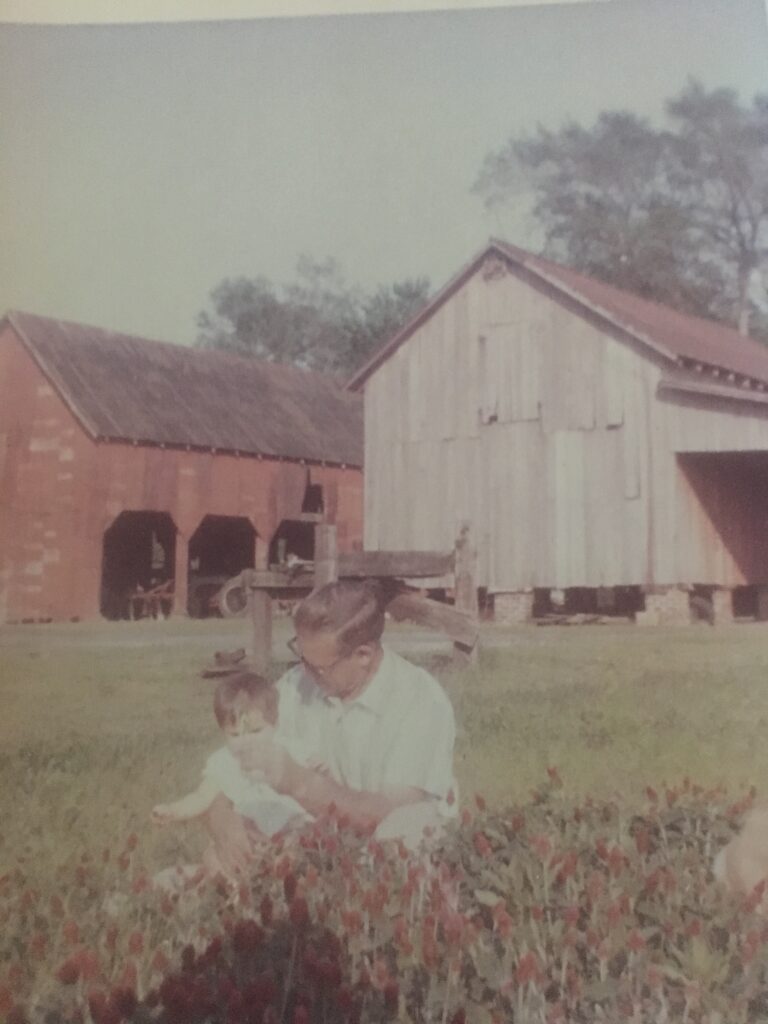
I think I knew a softer version of Jan Koolman.
A more relaxed Grandaddy.
The man I remember was quiet and funny.
And he had the most beautiful Dutch accent.
I loved listening to him talk.
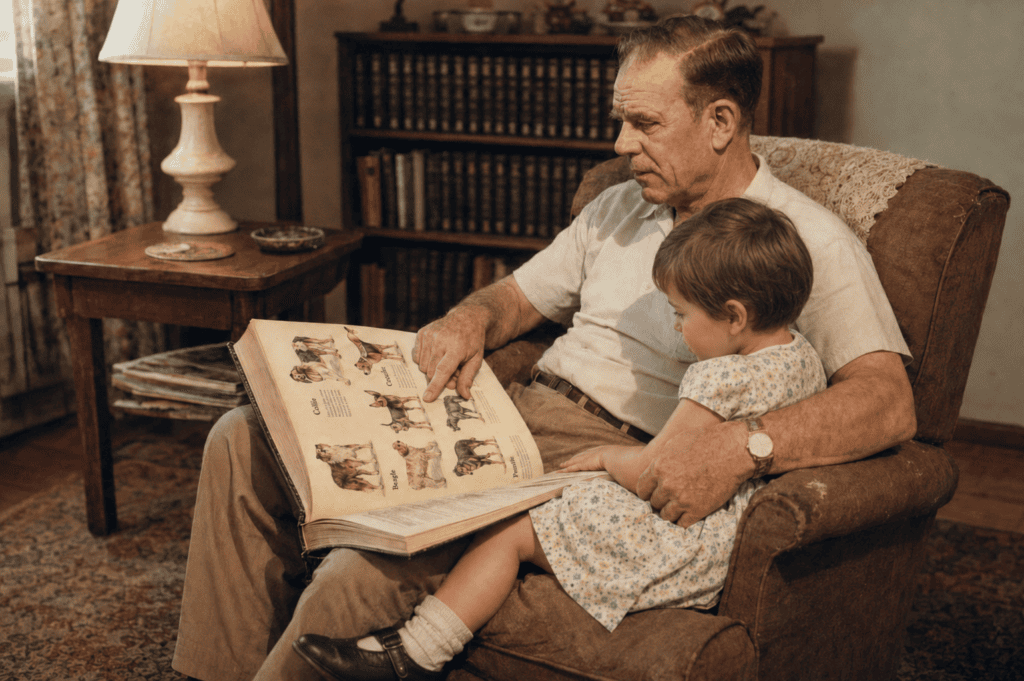
One of my favorite memories involves our family’s 1956 set of World Book Encyclopedias.
I would sit on Grandaddy’s lap and we would find the section about dogs.
Then he would read it to me.
I don’t remember every word he read.
I don’t remember how many times we did it.
I simply remember being on his lap, listening to him read about dogs in that Dutch accent I loved.
There are memories we preserve because somebody photographed them.
Others survive for reasons we cannot explain.
No photograph is necessary.
You close your eyes and you’re there.
Just As I Am
There is another place I can still see Grandaddy.
Church.
When we were in town, we would sometimes go with him to his old Southern Baptist church in Deep Creek, Virginia—a church my ancestors had helped establish near the end of the nineteenth century.
Grandaddy had not always been a regular churchgoer.
I’ve only recently begun learning more of that story.
He and Mamaw attended church before they married, but afterward he stopped going. Many years later, after a difficult period in his life, my Uncle Johnny invited him back.
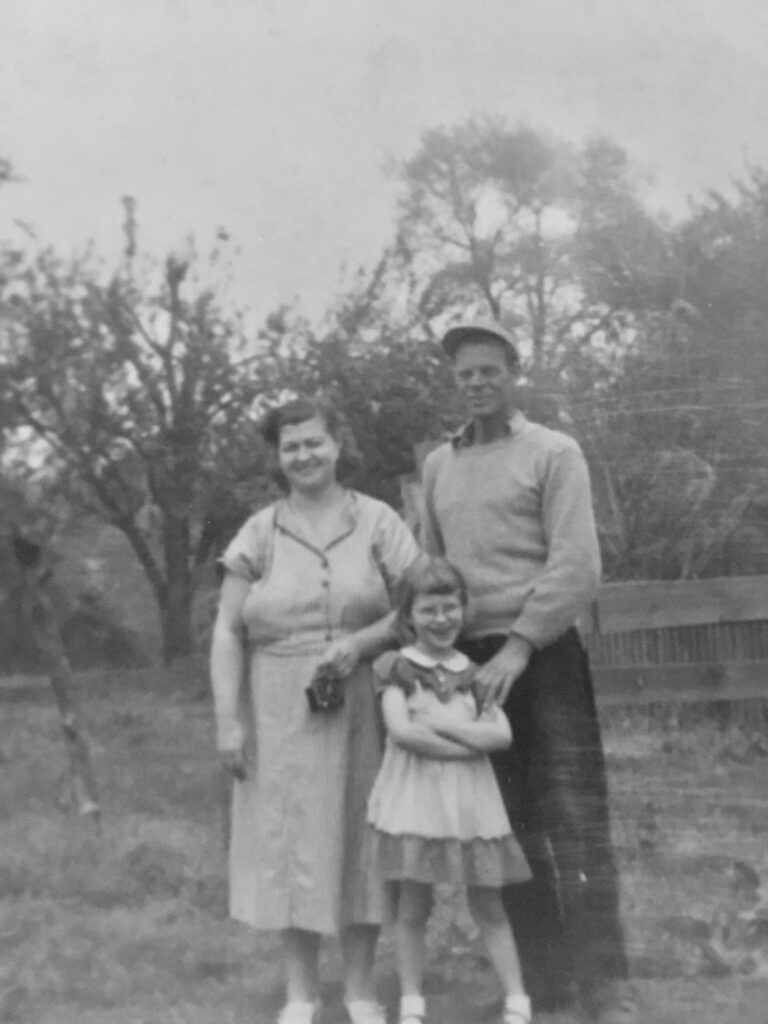
Someone began taking him to Sunday School.
He stayed for worship.
Then one Sunday, my cousin Jack made his own profession of faith. Someone suggested that perhaps Grandaddy and Jack should be baptized together.
And they were.
After that, Grandaddy became a regular churchgoer for roughly the final decade of his life.
I didn’t understand any of that when I was a girl.
I just knew I was sitting beside Grandaddy in church.
And I knew how the service would end.
Week after week, the congregation would sing the old invitation hymn:
Just As I Am.
Nearly half a century later, when someone asks me to close my eyes and picture my grandfather, that’s where my mind goes first.
Not to the farm.
Not to Ellis Island.
Not even to the fishing bank.
I see myself sitting beside Grandaddy in church.
And I hear that song.
The Fishing Pole My Father Kept
Grandaddy died in 1979.
I was fifteen.
I was a teenager doing what teenagers do—living largely inside my own little world, assuming there would always be more time.
There wasn’t.
There are things I wish I had asked him.
Things I wish I had noticed.
Stories I wish I had sat still long enough to hear.
But twenty years after Grandaddy died, my father walked into a Sunday School classroom carrying an old rod and reel.
Grandaddy’s rod and reel.
Dad had kept it.
He told his class that John didn’t own much fishing tackle. There was the cane pole he used behind the farmhouse and this one old rod and reel he took to the fishing pier or used when he went bottom fishing.
Dad used it to make a point.
It didn’t take sophisticated equipment to catch fish, he explained. What mattered was being in the right place, at the right time, with the right bait.
From there he moved into Acts and the story he had prepared to teach.
The fishing pole had done its job.
Except now I know it did one more thing.
It carried Grandaddy forward.
Dad could not have known in 1999 that one day I would sit down with the Sunday School lessons he left me and find those few paragraphs about my grandfather, John.
He couldn’t have known that they would make me call my mother and uncle and start asking questions.
Or that my uncle’s memories would bring back late-night fishing trips, rented rowboats, Ocean View picnics and fried chicken under a tablecloth.
He couldn’t have known that I would remember a set of 1956 World Book encyclopedias.
Or Grandaddy’s Dutch accent.
Or sitting on his lap talking about dogs.
Or sitting beside him in church singing Just As I Am.
Dad’s lesson eventually ends with another thought.
We don’t always know the effect our lives have on other people.
Philip encountered the Ethiopian on a desert road, did what God had given him to do, and then their lives moved on.
Perhaps that is true of our families, too.
We rarely know which moments someone else will carry.
Grandaddy probably never imagined that a little girl sitting on his lap while he read about dogs would remember it for the rest of her life.
He probably didn’t think anyone was paying attention when he sat beside that tidal basin with his cane pole.
And Dad probably thought he was simply preparing another Sunday School lesson when he wrote down the story.
But I was paying attention.
Dad was paying attention.
And now I am paying attention again.
An old fishing pole led me back to a quiet Dutchman who crossed an ocean as a teenager, worked hard, worried, laughed, fished when the tide was right, found his way back to church, and grew old enough to become my Grandaddy.
I wish I had asked him more.
I wish I had gone fishing with him.
But perhaps remembering is its own way of sitting beside someone again.
And tonight, somewhere in my memory, the tide is right.
Grandaddy is sitting beside the water.
His worm is in the water.
He isn’t catching a thing.
And he seems perfectly content.
From the Porch
We spend so much of our lives believing that memories are made during the big occasions—the vacations, the holidays, the celebrations we carefully plan.
But sometimes the memories that stay are much quieter.
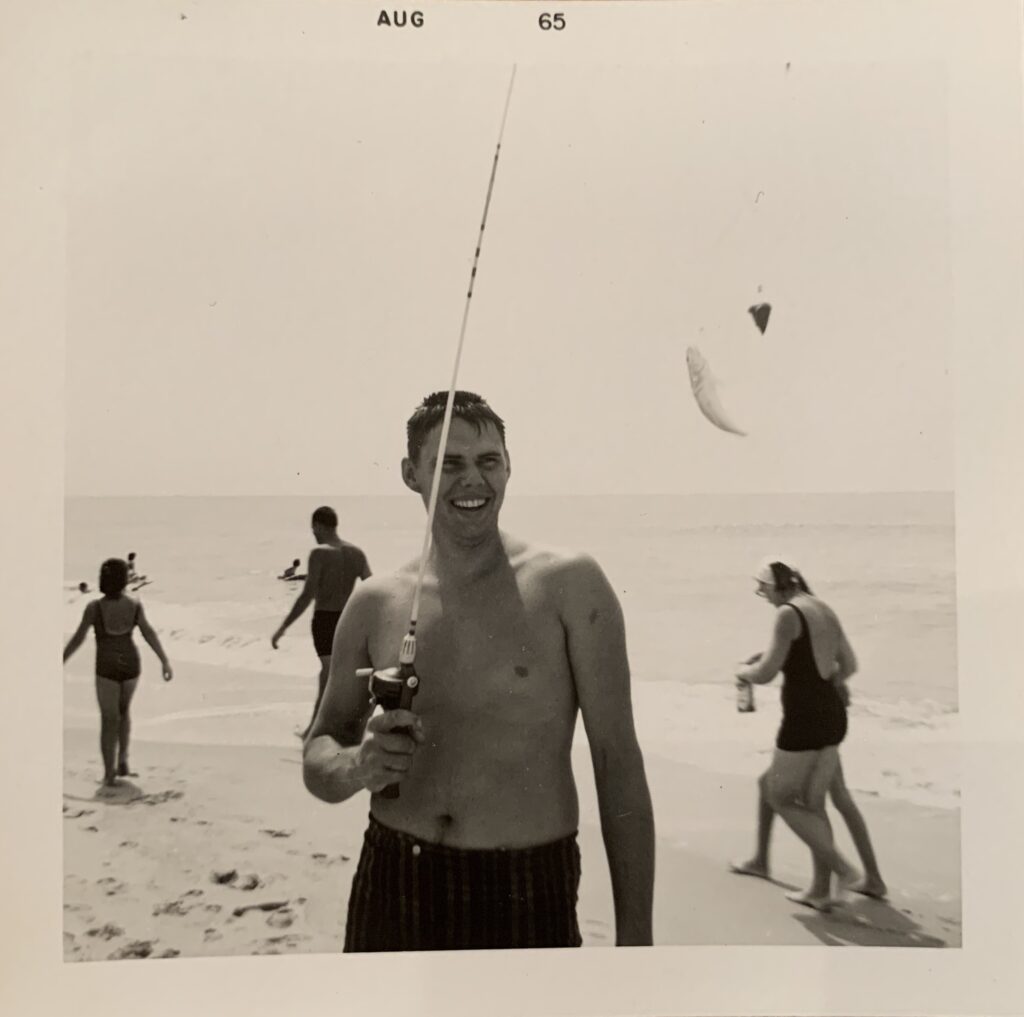
This photograph captures one of the few times I remember Dad going to the beach with us on a day trip. There he sits in the sand, fishing poles behind him, holding up fishing hat as though he is telling the photographer something that might have been worth remembering. Probably telling one of his dad stories.
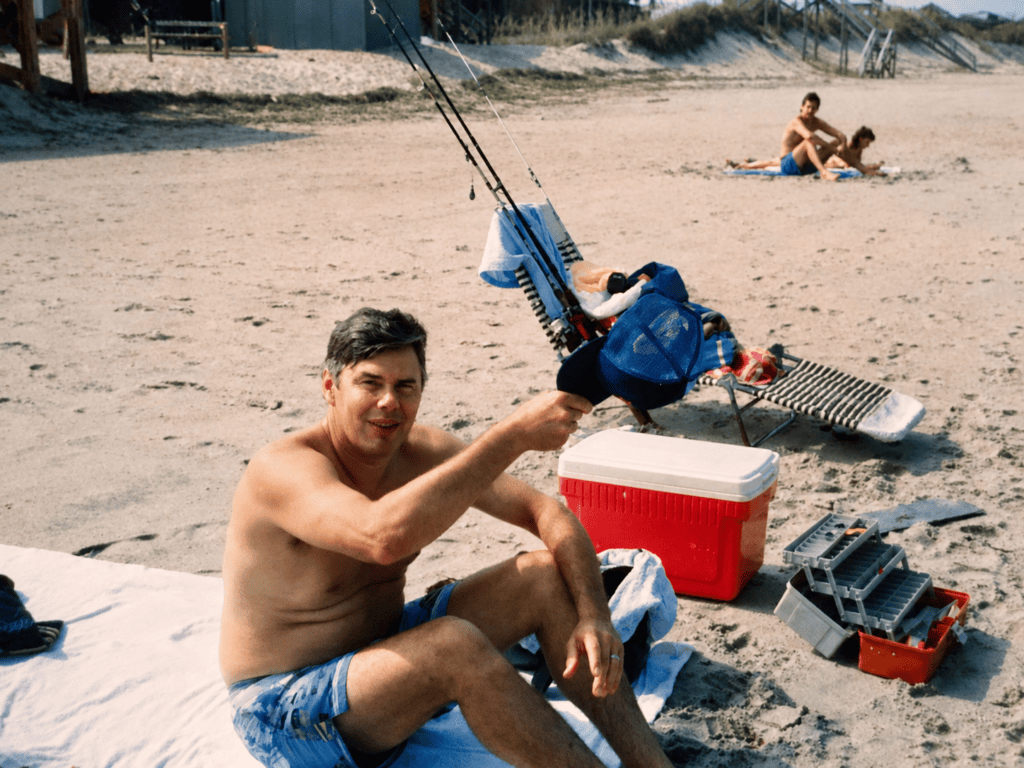
But he was there.
And all these years later, that is what matters.
A grandfather’s lap.
A book about dogs.
Fried chicken under a tablecloth.
An old hymn.
A cane pole hanging over muddy water.
A father sitting with his family on the beach.
Pay attention to those ordinary moments.
Someday, someone you love may discover that they weren’t ordinary at all.

About the Author
Sherri holds an AA in Anthropology, a BA in History and Religious Studies from Albright College, and an MA in Ministry Leadership from Capital Seminary & Graduate School. She is the founder of Chicks on the Road Publishing, where she creates faith-filled resources designed to encourage women in their walk with Christ, their homes, and their family legacy.
Through storytelling, Bible studies, journals, devotionals, and memory-keeping projects, Sherri hopes to inspire others to live intentionally, preserve what matters most, and pass their faith to the next generation.
Creating from anywhere. Encouraging everywhere.