
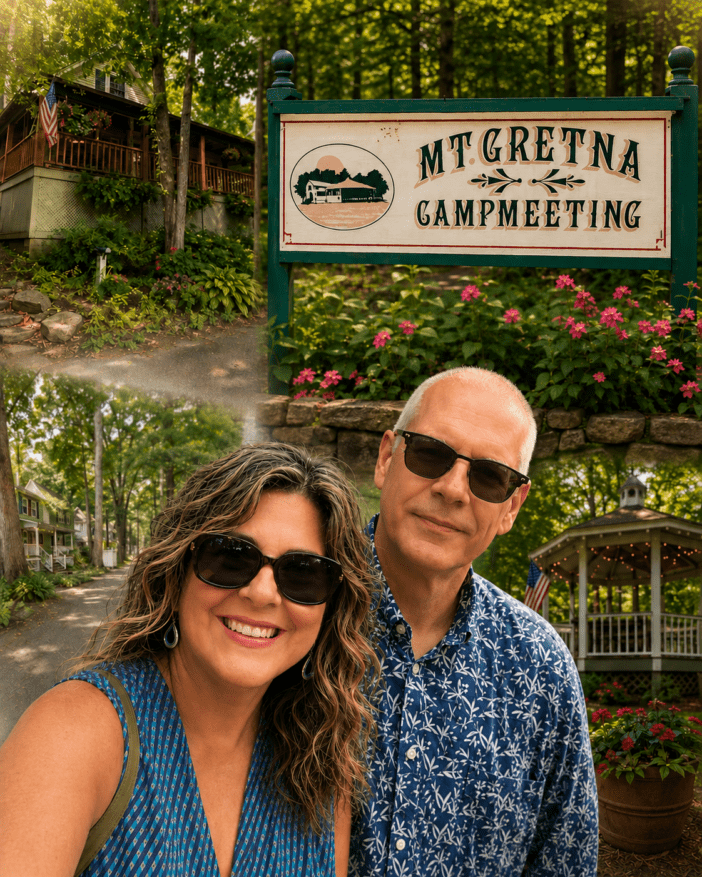
There are places that simply ask you to slow down.
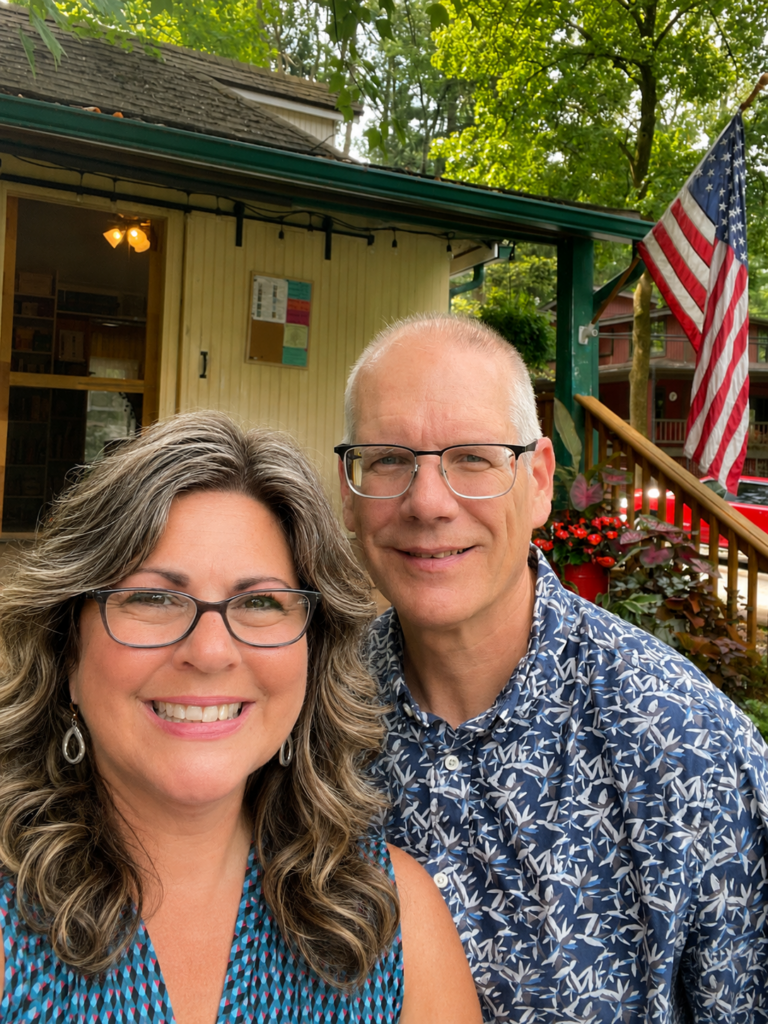
Places where time seems softer. Where front porches matter more than television screens, neighbors still wave from rocking chairs, and the scent of pine and damp woodland earth lingers in the air.
For my husband and me, one of those places is Mount Gretna, Pennsylvania.
Nestled among towering trees in the rolling hills of Lebanon County, Mount Gretna is unlike any other place in Pennsylvania. Part historic village, part summer retreat, part arts community, and part sacred gathering place, Mount Gretna has been quietly enchanting visitors for well over a century. Today, it remains one of Pennsylvania’s best-kept treasures—a woodland escape filled with whimsical cottages, winding paths, and a rich spiritual history rooted in the American camp meeting movement.
Falling in Love with Mount Gretna
In 2024, my husband and I attended Mount Gretna’s annual Tour of Homes, an event where residents graciously open selected homes and historic buildings to ticketed guests. We had heard wonderful things about the event, but nothing truly prepared us for the experience.
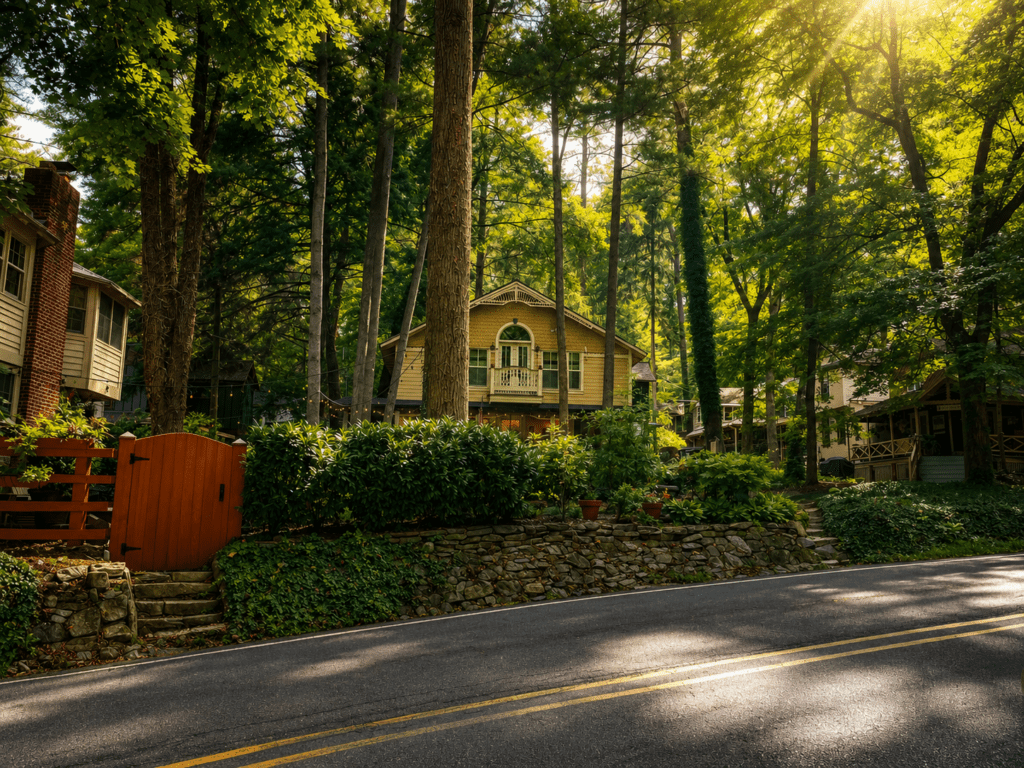
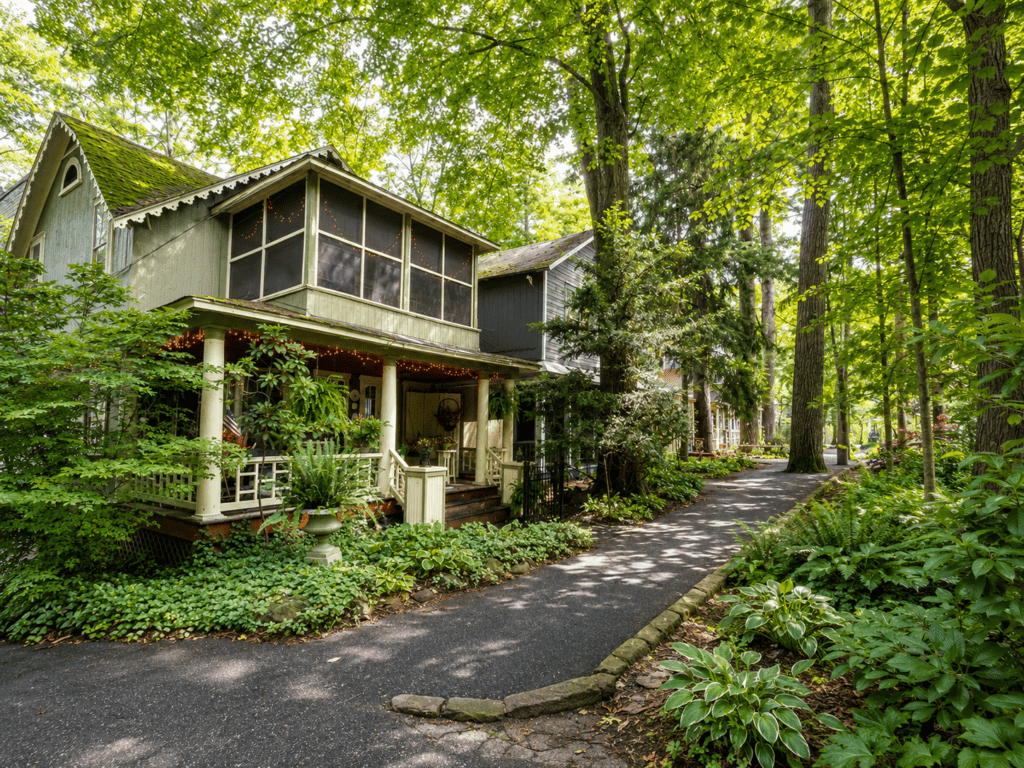
As we wandered from cottage to cottage beneath the canopy of mature trees, I found myself completely captivated.
The homes are nestled astonishingly close together—almost as though they grew organically from the forest floor itself. Many date back to the late 1800s and early 1900s, and despite their relatively modest size, each possesses a personality entirely its own. Some are adorned with intricate Victorian trim. Others feature expansive wraparound porches overflowing with flowers, vintage furnishings, and generations of memories.
No two cottages are exactly alike.
What struck me most was not simply the architecture, but the feeling.
The entire community sits tucked among the woods. Everywhere we walked, there was shade. Massive trees towered overhead, creating a cool, peaceful atmosphere even on a warm summer day. Ferns, hydrangeas, hostas, and countless other botanicals flourished around the cottages. The woodland scent—that unmistakable fragrance of pine needles, damp earth, moss, and summer greenery—seemed to surround us at every turn.
It felt as though we had stepped into another era.
As we strolled along narrow pathways and peered onto welcoming porches, I couldn’t help imagining all the families who had gathered there over the decades: grandparents rocking in wicker chairs, children chasing lightning bugs at dusk, neighbors sharing stories late into the evening.
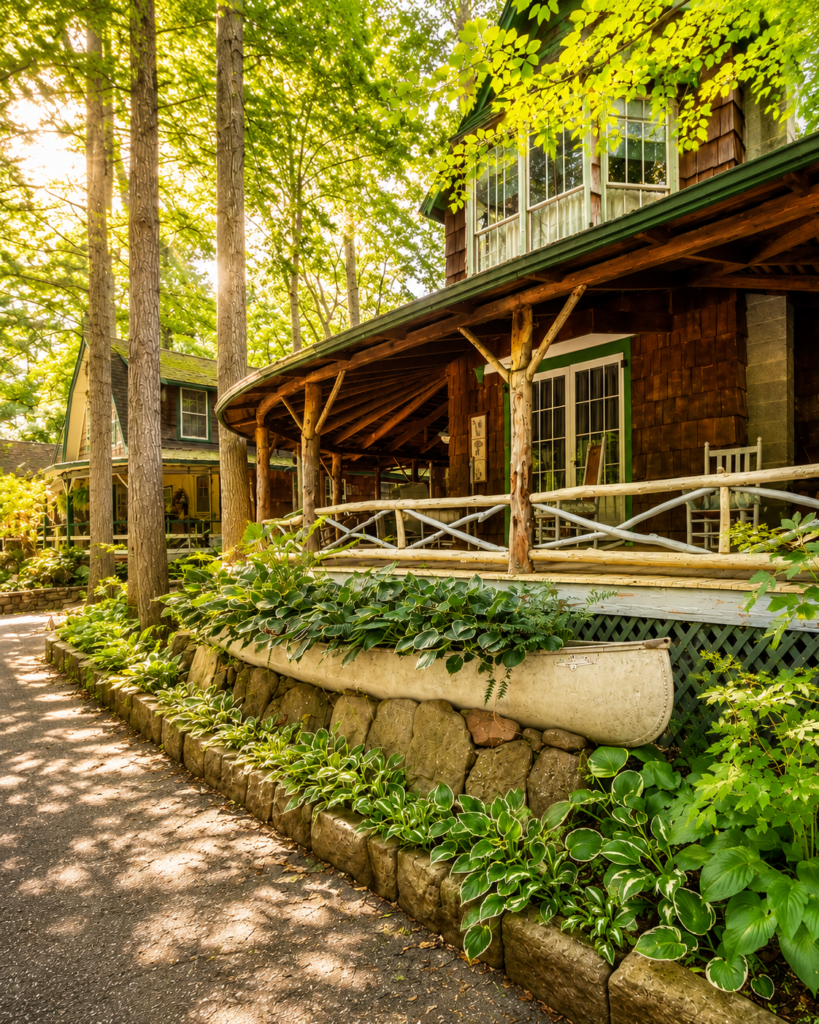
There is a coziness to Mount Gretna that is difficult to describe.
You don’t simply visit Mount Gretna.
You experience it.
A Community Born from Faith
To fully appreciate Mount Gretna, it helps to understand its remarkable origins.
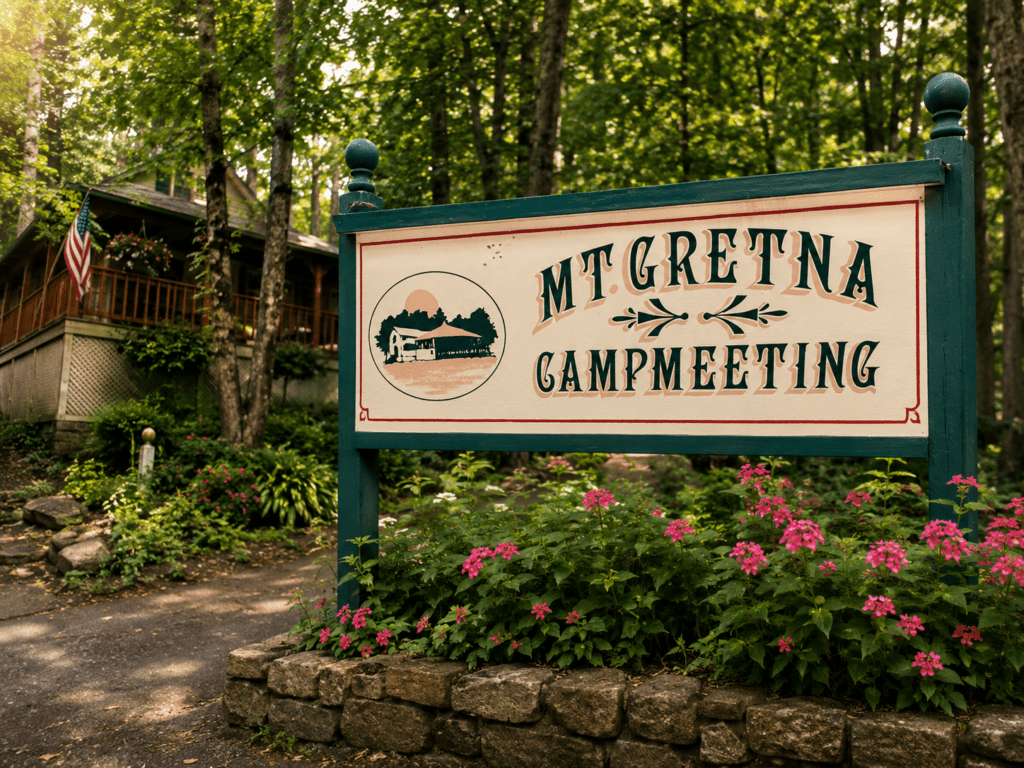
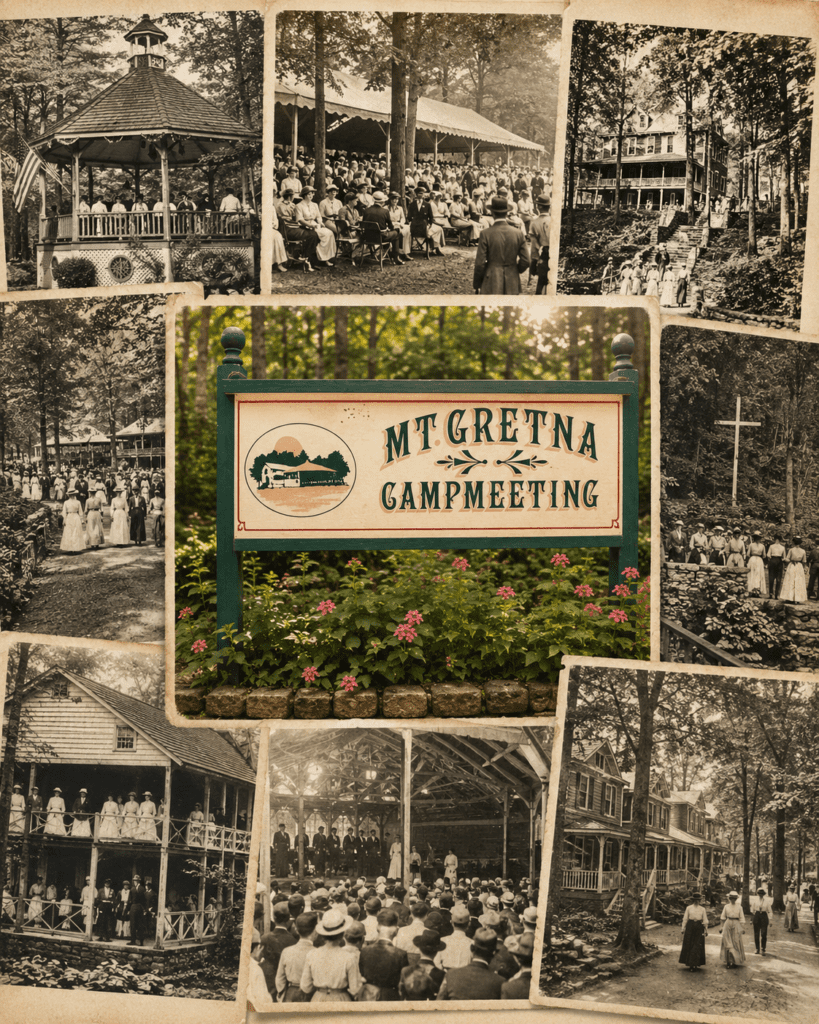
The story begins in the late nineteenth century during a period when camp meetings were flourishing throughout the United States. Camp meetings were large outdoor religious gatherings where families traveled—often by wagon—to spend days or weeks worshiping, listening to sermons, singing hymns, and enjoying Christian fellowship.
These gatherings offered much more than worship.
For many families, camp meetings provided spiritual renewal, community, recreation, and a welcome break from the hardships and routines of daily life. People camped in tents, cooked meals together, attended services throughout the day, and often formed lifelong friendships. Over time, temporary tents frequently evolved into small seasonal cottages, creating enduring communities centered around faith.
Mount Gretna’s camp meeting tradition began in 1892.
Leaders from the United Brethren Church had previously gathered at nearby Stoverdale Camp Meeting but sought a new location that would provide a more secluded and spiritually focused setting. Industrialist and philanthropist Robert H. Coleman generously leased approximately twenty acres of woodland for the remarkable sum of just one dollar for twenty years. The Mount Gretna Campmeeting Association was officially chartered on March 17, 1892.
The first Bible Conference was held later that same year.
Amazingly, by the time attendees arrived for those first meetings, more than one hundred cottages had already been constructed. Canvas tents supplemented the housing, and worshippers gathered in an open worship area to hear sermons, sing hymns, pray, and enjoy fellowship beneath the trees.
Those humble beginnings laid the foundation for the extraordinary community that still exists today.
The Camp Meeting Tradition
Modern Americans may find it difficult to imagine the importance camp meetings once held in the life of a community.
During the nineteenth century, many rural families lived great distances from established churches. Ministers were scarce, travel was difficult, and social opportunities were limited. Camp meetings became powerful occasions for worship, learning, and social connection. Entire families would journey for days to attend, often remaining for a week or longer.
Services were energetic and deeply emotional.
Preachers delivered passionate sermons. Congregations sang hymns together, often outdoors beneath the trees. Prayer meetings continued late into the evening. Meals were shared. Friendships were formed.
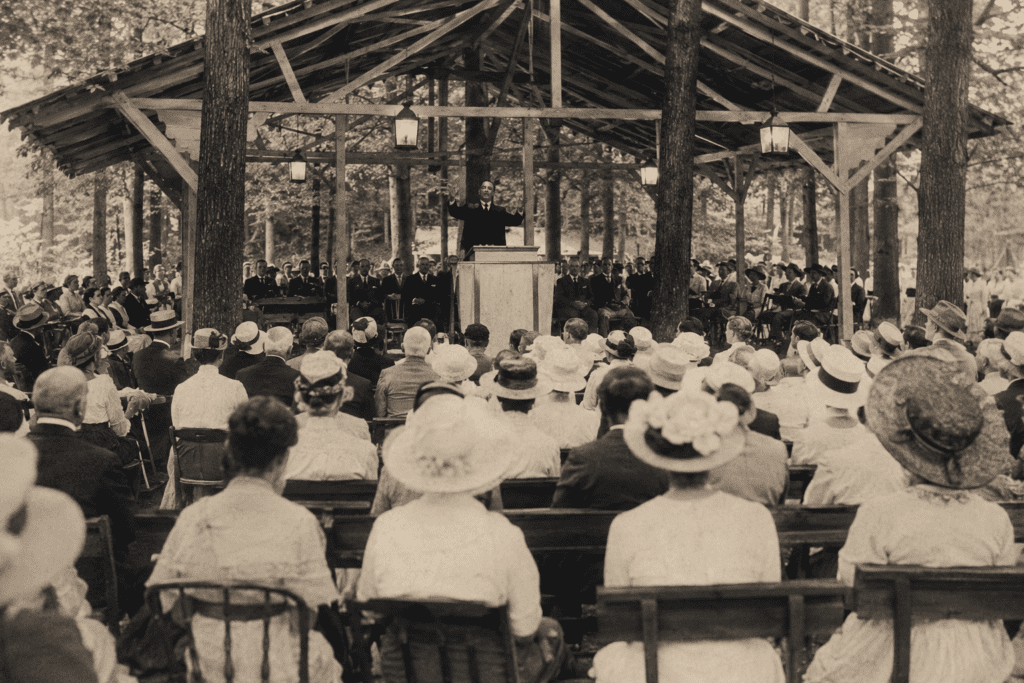
For many attendees, these gatherings represented both a spiritual homecoming and a treasured annual reunion.
Although American society has changed dramatically since those early years, Mount Gretna continues to preserve this tradition.
Today, the historic Tabernacle remains the heart of the Bible Festival. Worship services, Bible teaching, concerts, and fellowship events continue beneath its distinctive open-air structure, maintaining a sacred legacy that has endured for more than 130 years.
What I find particularly beautiful is that even as Mount Gretna has evolved into a thriving arts and recreational community, it has never completely lost sight of its spiritual roots.
Faith, hospitality, and community still seem woven into the very fabric of the place.
The Cottages: Tiny Homes with Enormous Character
Perhaps nothing defines Mount Gretna more than its cottages.
Many were originally intended as simple summer residences for camp meeting attendees. Over the decades, families expanded, renovated, and lovingly preserved these homes, adding decorative Victorian flourishes, colorful trim, and inviting porches.
One of the delightful traditions in Mount Gretna is naming cottages.
As you wander through town, you’ll discover whimsical names displayed proudly above porches and doorways. These names often reflect family history, humor, treasured memories, or simply the personality of the home itself.
The close proximity of the cottages also creates something increasingly rare in modern life: genuine neighborhood.
The homes may be close together physically, but perhaps that closeness has helped preserve the strong sense of community for which Mount Gretna is known.
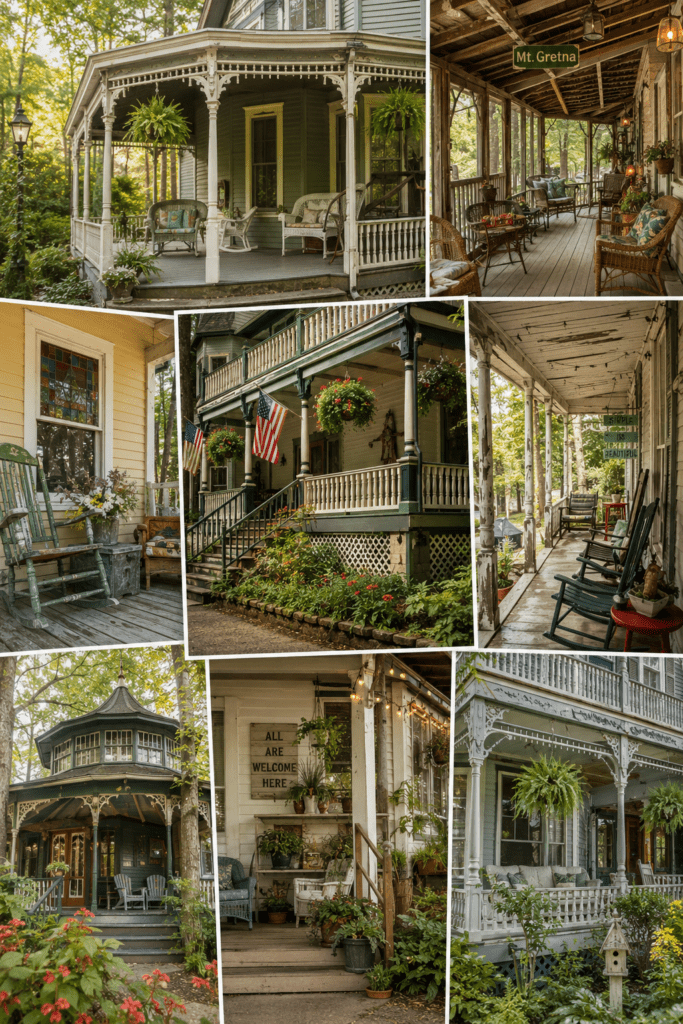
Front porches remain gathering places.
Conversations happen spontaneously.
Neighbors know one another.
In many ways, Mount Gretna represents a slower, gentler style of living that many of us long for today.
Beyond Camp Meeting: The Chautauqua Influence
Remarkably, 1892 was significant for another reason as well.
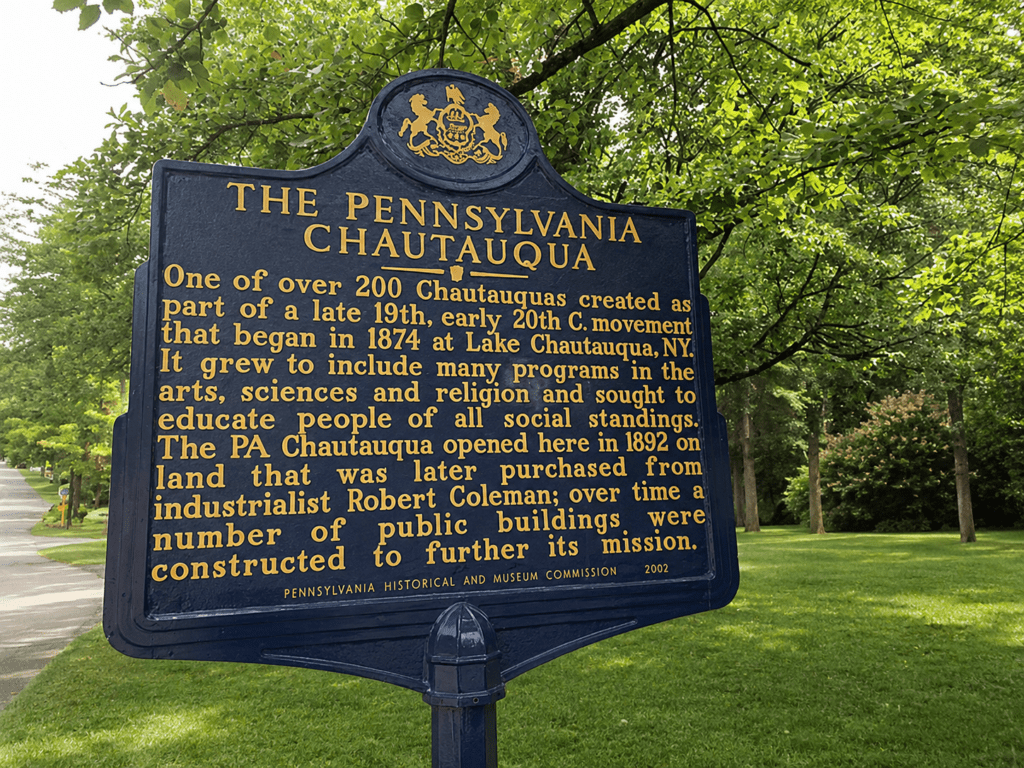
That same year, leaders established the Pennsylvania Chautauqua adjacent to the camp meeting grounds. Inspired by the original Chautauqua Institution in New York, the movement sought to combine education, religion, arts, culture, and lifelong learning. Lectures, concerts, classes, and performances became central components of the Mount Gretna experience.
More than a century later, that commitment to arts and education continues.
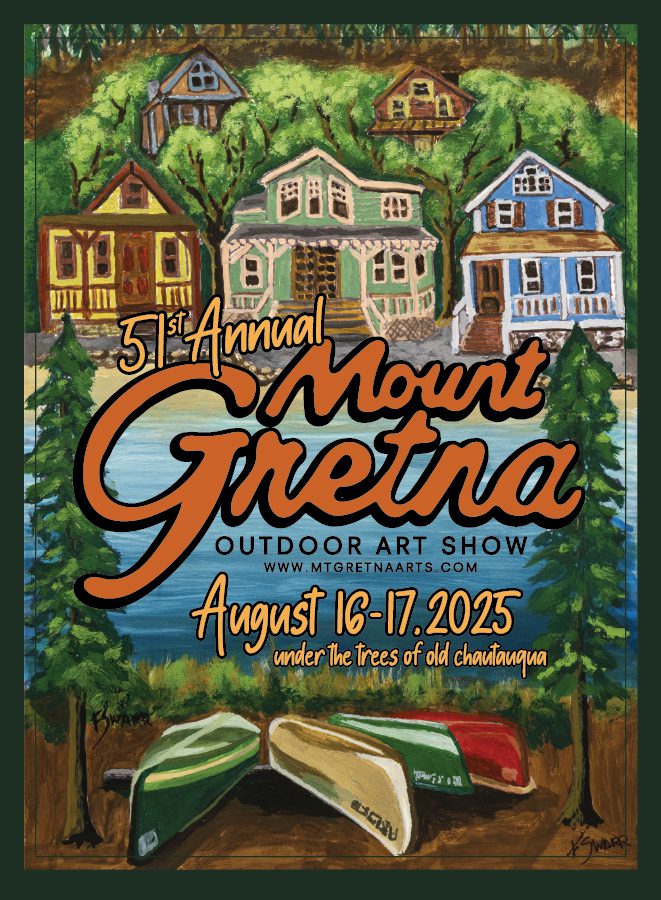
Visitors can enjoy theater performances, concerts, art festivals, lectures, and cultural programs throughout the summer season, ensuring that Mount Gretna remains vibrant and relevant while honoring its historic past.
A Visit Isn’t Complete Without the Jigger Shop
No personal reflection on Mount Gretna would be complete without mentioning one of our favorite traditions: a stop at the beloved Jigger Shop.

For generations, families have gathered there for ice cream, light meals, and, of course, the famous frozen drinks known as jiggers. Sitting on the porch with a cold treat after a long walk through the cottages has become one of our favorite ways to end a visit.
There is simply something magical about sharing ice cream in a place where so many traditions have been lovingly preserved.
Why Mount Gretna Matters
Looking back now, our visit to Mount Gretna in 2024 came at exactly the right moment, although I didn’t know it then.
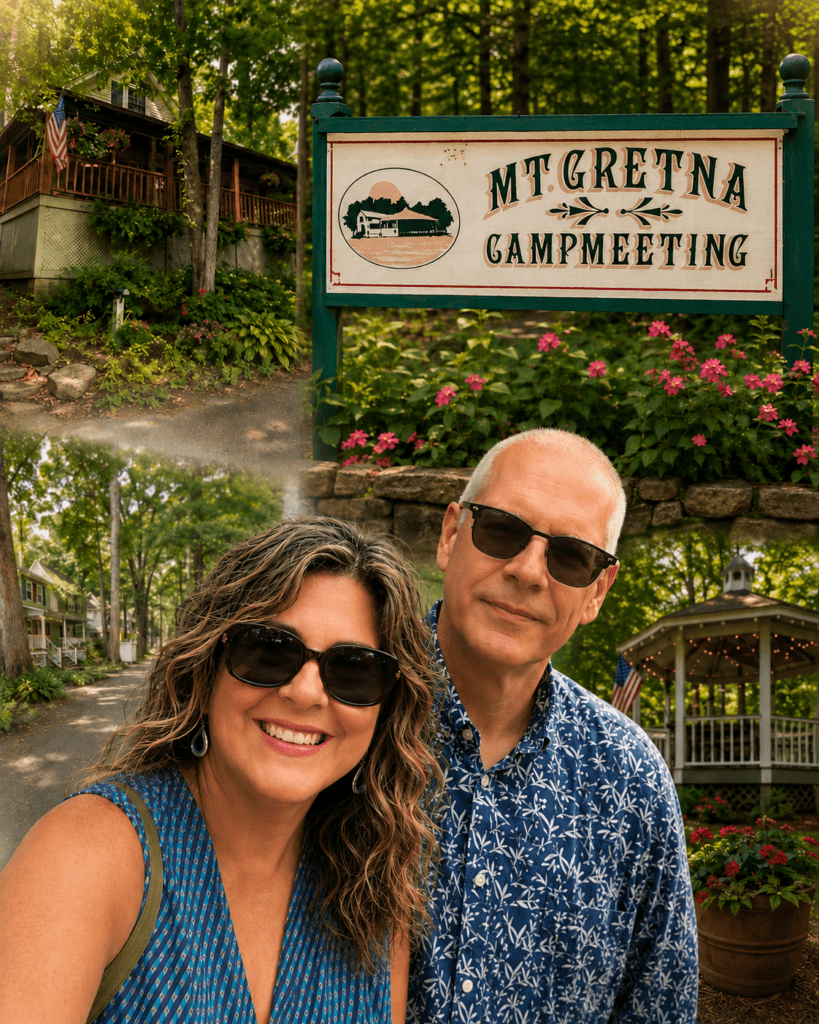
Just one week after my husband and I spent that idyllic day wandering through the cottages during the Tour of Homes, my world changed dramatically.
After years of serving as Director of Advancement for a nonprofit organization supporting individuals with intellectual disabilities and autism—a mission I deeply loved—I was unexpectedly terminated due to significant philosophical differences between myself and a new CEO.
To say I was devastated would be an understatement.
I had poured my heart into that work. Losing that role left me questioning far more than my career. It sent me into a year-long season of sadness and uncertainty as I wrestled with difficult questions: Who am I apart from my job? What kind of life do I truly want? What values matter most? And what do I want the next chapter of my life to look like?
As painful as that season was, it also became a period of profound reflection.
And perhaps that is why Mount Gretna has remained so firmly planted in my memory.
When I think back to those shaded pathways, the century-old cottages, and the gentle rhythm of life that seems to permeate the community, I realize now that Mount Gretna was quietly offering me a glimpse of something my soul had been craving all along.
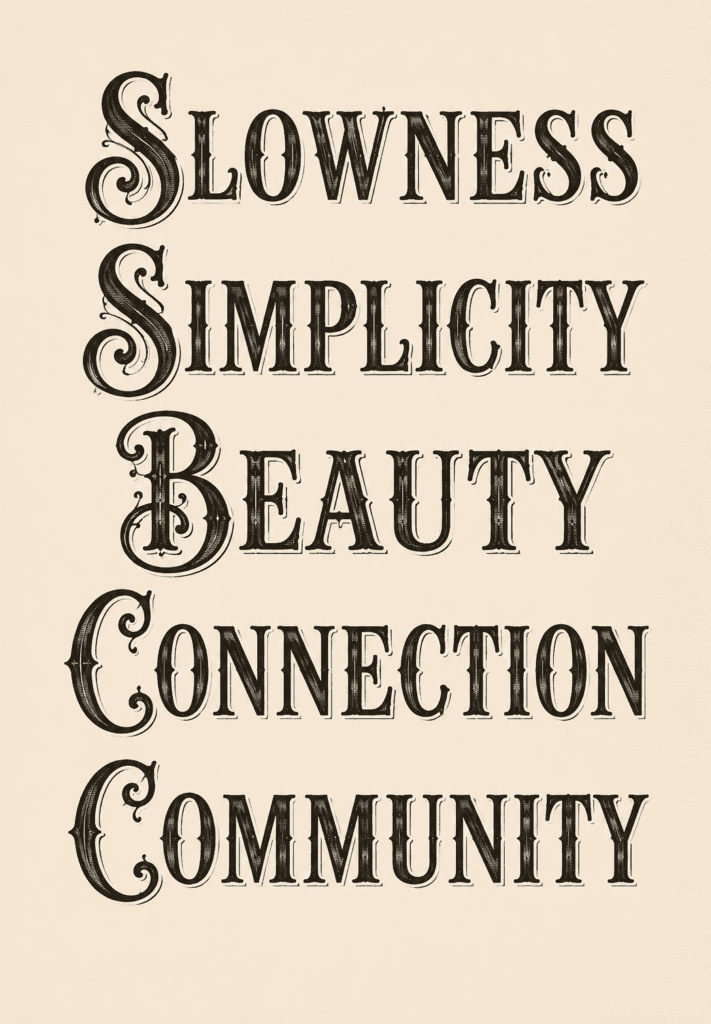
The cottages themselves seemed to embody those values. Many are modest in size, yet rich in character. They were never designed to impress through grandeur or extravagance. Instead, they were built for gathering, for conversation, for faith, for family, and for savoring life’s ordinary moments.
In many ways, Mount Gretna challenged the narrative I had been living for years—the belief that busyness equals significance, that achievement determines worth, or that our identity is defined by a title on a business card.
Walking those woodland paths, surrounded by porches filled with flowers and homes lovingly preserved across generations, I caught a glimpse of another way of living.
A gentler way.
A more intentional way.
A more hygge way.
The Beginning of Chicks on the Road
Out of that difficult season emerged something entirely unexpected.

As I continued reflecting on what truly mattered, I began dreaming about a life centered on creativity, family, storytelling, travel, home, and the pursuit of beauty in everyday moments. Those dreams eventually became Chicks on the Road.
What started as an attempt to rediscover myself gradually evolved into a new vision for my future—one rooted less in career advancement and more in inspiration, creativity, and helping others create lives filled with warmth, simplicity, and joy.
In many respects, Mount Gretna became part of that story.
Because sometimes the places that captivate us most are doing more than simply entertaining us. Sometimes they are quietly reminding us who we are.
Or perhaps, who we are becoming.
Today, when I think of Mount Gretna, I don’t just remember charming cottages, camp meeting history, or afternoons spent enjoying treats at the Jigger Shop. I remember a place that arrived in my life at precisely the moment I needed it—a place that whispered that there could still be beauty after loss, purpose after disappointment, and new beginnings waiting just beyond the trees.
And for that, Mount Gretna will always hold a very special place in my heart.
In a world that moves too fast, perhaps Mt. Gretna reminds us that the richest moments are found in slowing down, gathering together, and savoring the beauty around us. Join Chicks on the Road as we rediscover the beauty of slowness, simplicity, connection, and community.
Feeling inspired by Mount Gretna’s spirit of community and renewal? If you’re considering a church, ministry, or small group retreat, be sure to explore our guide to 10 Beautiful Christian Retreat Centers in Pennsylvania for Churches and Small Groups for ideas on places to gather, reconnect, and grow together.
Sources & Further Reading
- Mount Gretna Official Website. History of Mount Gretna. https://mtgretna.com/
- Mount Gretna Tabernacle and Bible Festival. https://www.mtgretnatabernacle.org/
- Mount Gretna Campmeeting Association Historical Materials. https://mtgretnahistory.org/
- Encyclopaedia Britannica. Camp Meeting. https://www.britannica.com/topic/camp-meeting
- Everything Explained. Camp Meeting. https://everything.explained.today/Camp_meeting/
- The Jigger Shop at Mount Gretna. https://jiggershop.com/

About the Author
Sherri holds an AA in Anthropology, a BA in History and Religious Studies from Albright College, and an MA in Ministry Leadership from Capital Seminary & Graduate School. She is the founder of Chicks on the Road Publishing, where she creates faith-filled resources designed to encourage women in their walk with Christ, their homes, and their family legacy.
Through storytelling, Bible studies, journals, devotionals, and memory-keeping projects, Sherri hopes to inspire others to live intentionally, preserve what matters most, and pass their faith to the next generation.
Creating from anywhere. Encouraging everywhere.