
Recently, I did something that might seem a little unusual.
I ordered a small brass plaque for the inside of a cabinet.
Not because the cabinet is particularly valuable.
Not because it belongs in a museum.
I did it because I’m worried that someday no one will know what it is.
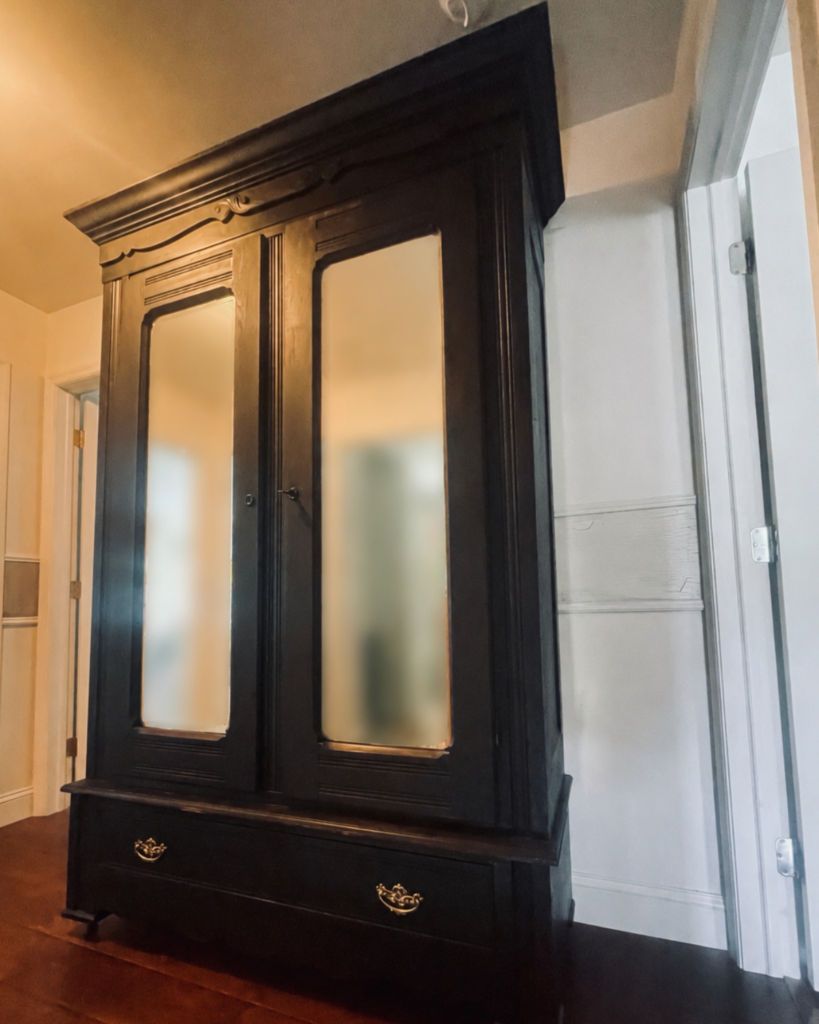
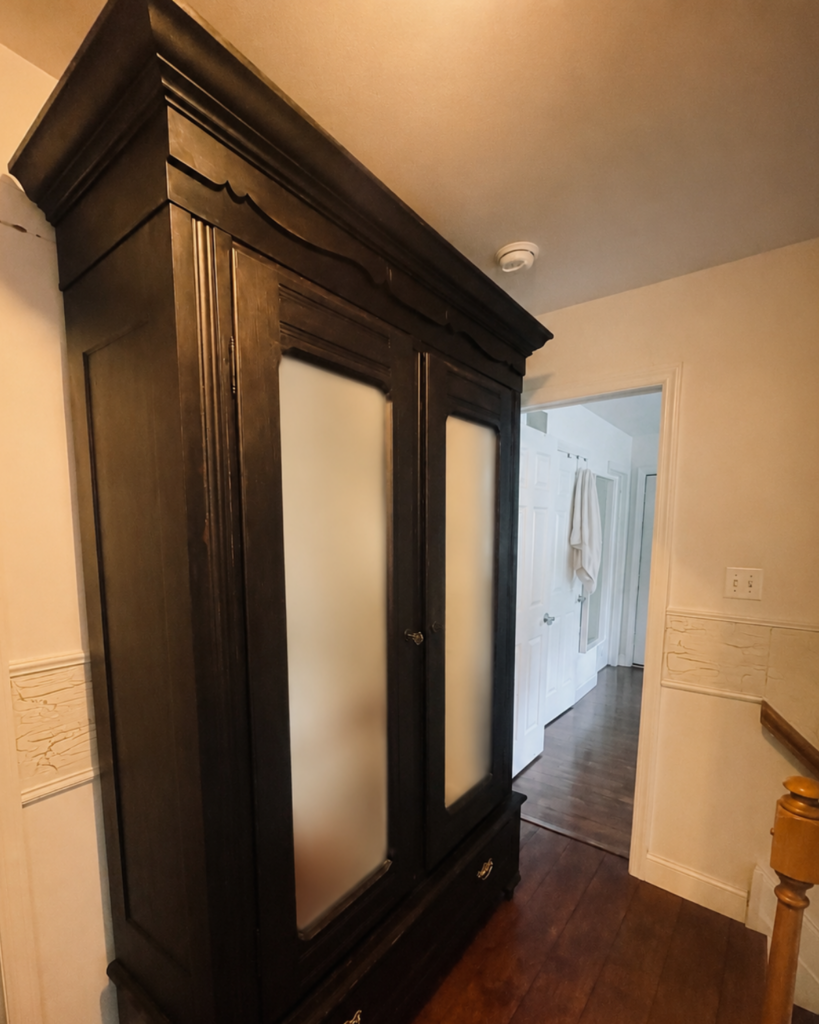
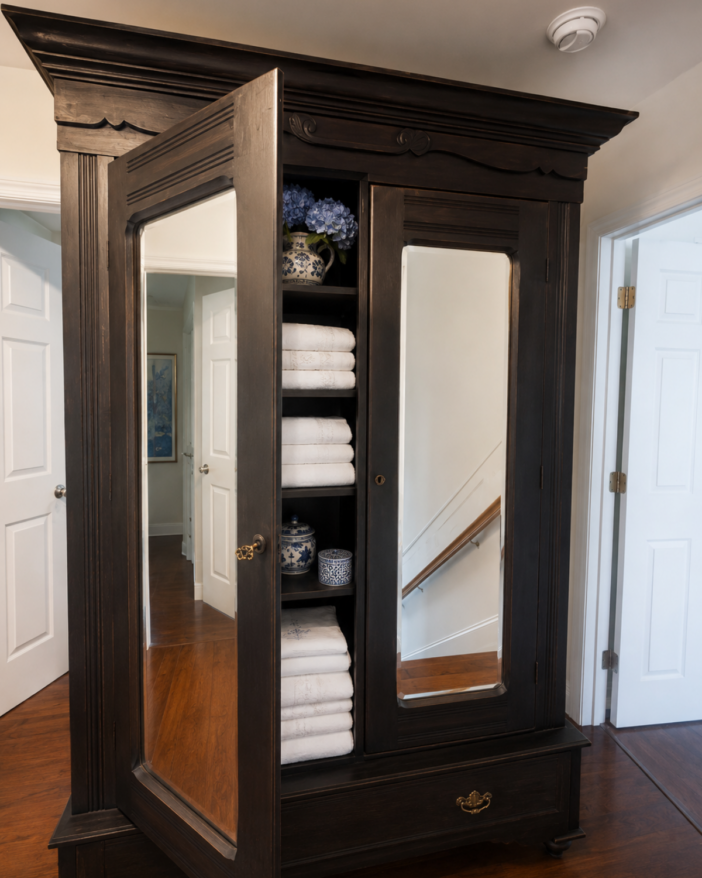
The cabinet belonged to my grandmother and came from her farmhouse. It’s what is known as a “knockdown cabinet,” a remarkable piece of furniture that is estimated to be around 125 years old. Every piece fits together and, at the very end, a simple wedge locks the entire cabinet into place.
Today it stands in my home holding linens, comforters, and bedspreads. It is one of my favorite pieces of furniture.
But the story of this cabinet goes much deeper than its age.
My mother inherited it from her mother in the 1980s, and it became part of our family home during my teenage years. When my parents moved to another part of Virginia in 1989, my dad decided he wanted to refinish it before bringing it into the house.
That sounds like a good plan.
The problem was that my dad was far better at starting outdoor projects than finishing them.
He carefully disassembled the cabinet and neatly stacked all of the pieces in one side of the garage. There they sat.
For thirty years.
Through hot Virginia summers and humid weather, the cabinet remained stacked in the garage waiting for a refinishing project that never happened.
When my dad passed away and my mother moved to a smaller home, I inherited the cabinet. By then, none of us even knew if all the pieces were still there. We had no idea whether a cabinet that old, after spending three decades in a garage, could ever be put back together again.
But piece by piece, it came together.
Miraculously, everything fit.
The same simple wedge that had held it together more than a century ago still did its job.
And in that moment, I realized something important.
The cabinet doesn’t just remind me of my grandmother, who once owned it.
It reminds me of my mother, who cared for it.
It reminds me of my father, who always had one more project he intended to finish.
Every scratch, every imperfection, every sign of age tells part of that story.
That’s why I never refinished it.
I left it exactly as it is.
Because the cabinet isn’t valuable to me because it’s antique.
It’s valuable because when I open its doors, I don’t just see a piece of furniture.
I see my family.
A House Full of Stories
I’ve always been sentimental.
Not just a little sentimental.
The kind of sentimental that treasures old photographs, handwritten recipes, family furniture, and everyday objects that carry the fingerprints of people I have loved.
For years I’ve been a hobby genealogist, researching family history and trying to understand the lives of those who came before me. I love discovering where they lived, how they worked, what challenges they faced, and the stories they left behind.
Perhaps that’s why so many things in my home have stories attached to them.
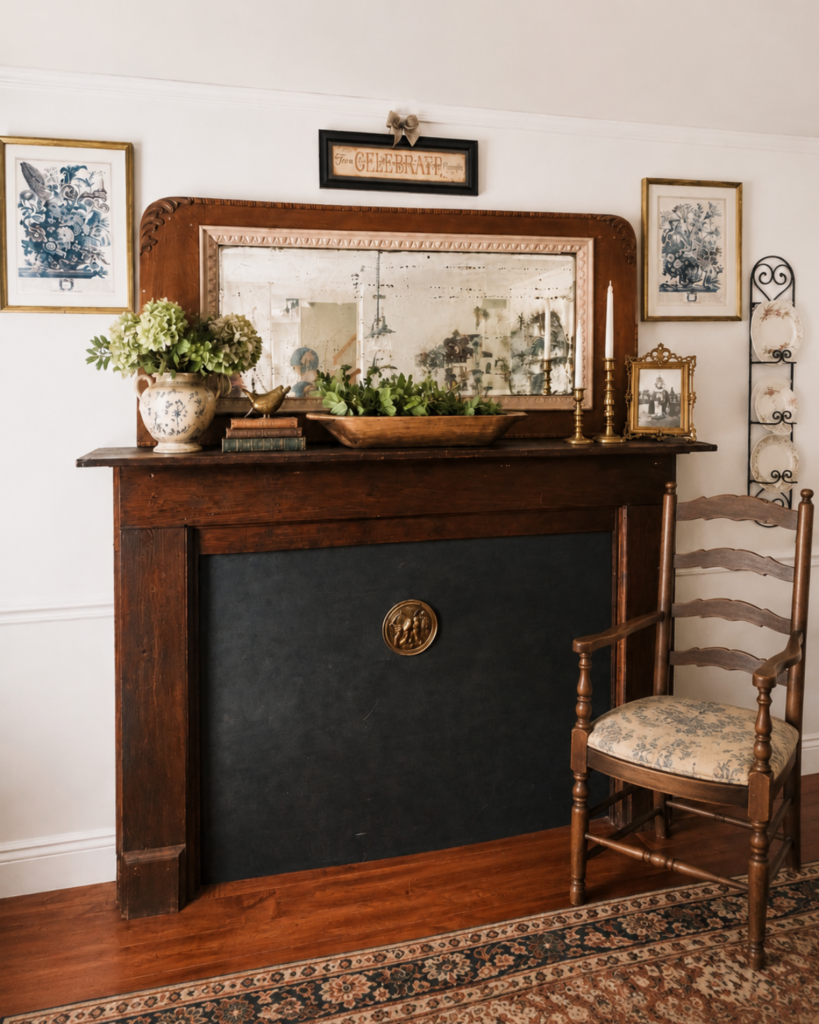
In my dining room stands a fireplace mantle from my grandmother’s farmhouse, a home built in the 1850s. I acquired it in 1989 and refinished it myself, adding a blackboard behind it to create the appearance of a fireplace. Over the years it has moved with me nearly eighteen times before finally settling into the home where we’ve now lived for twenty-eight years.
Visitors often stop to admire it.
What they don’t see is everything it represents.
I have bedroom furniture that belonged to previous generations.
I have a couch my aunt purchased in the 1950s that has been lovingly recovered several times and continues to serve our family today.
I have a toy room for my grandchildren filled mostly with vintage toys from the 1970s and 1980s—not collectibles sitting untouched on shelves, but toys that are meant to be played with and enjoyed.
Even my kitchen tells a story.
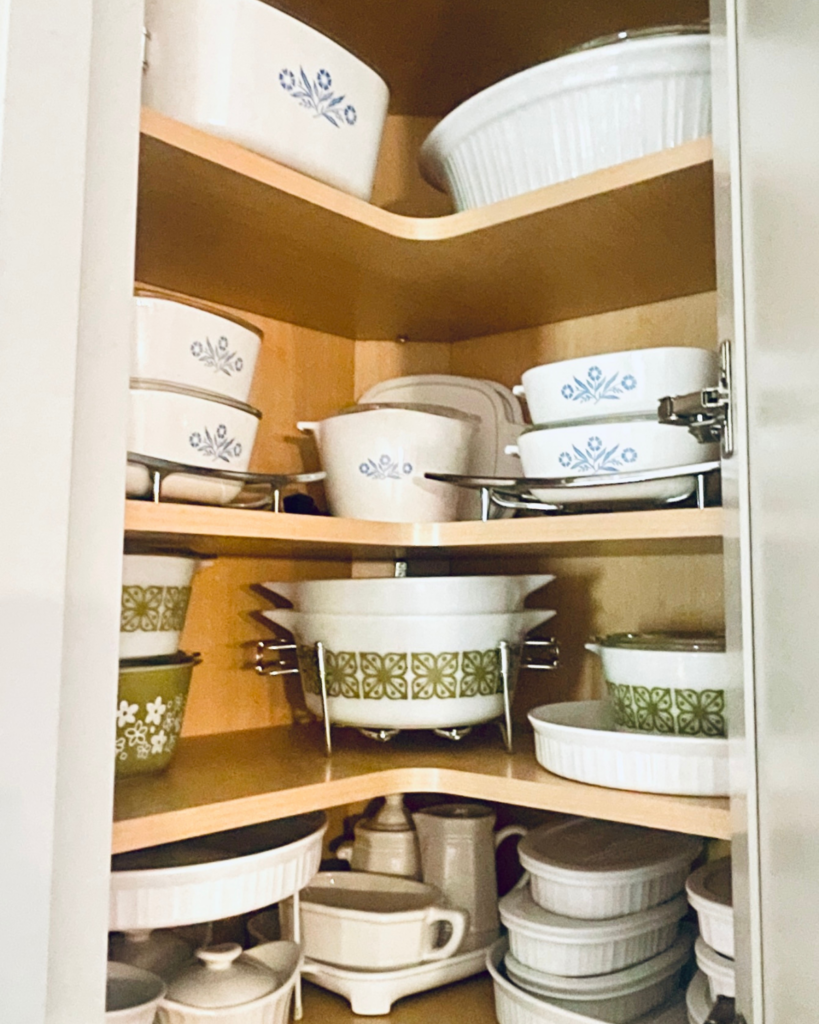
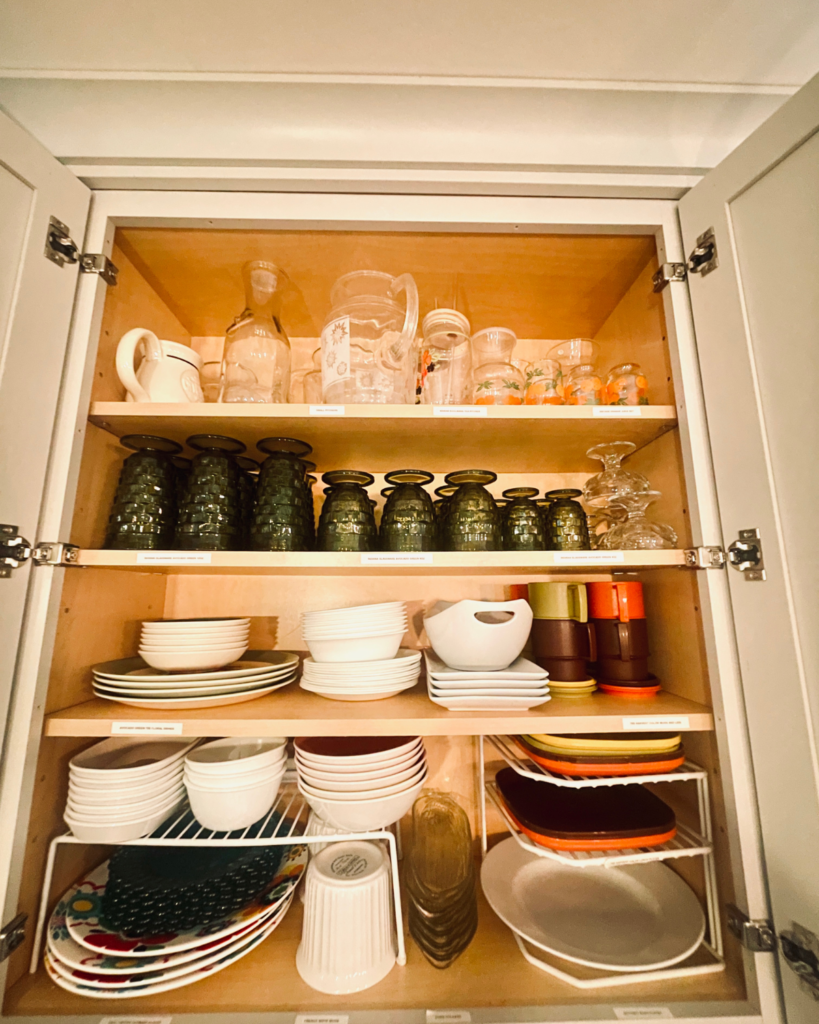
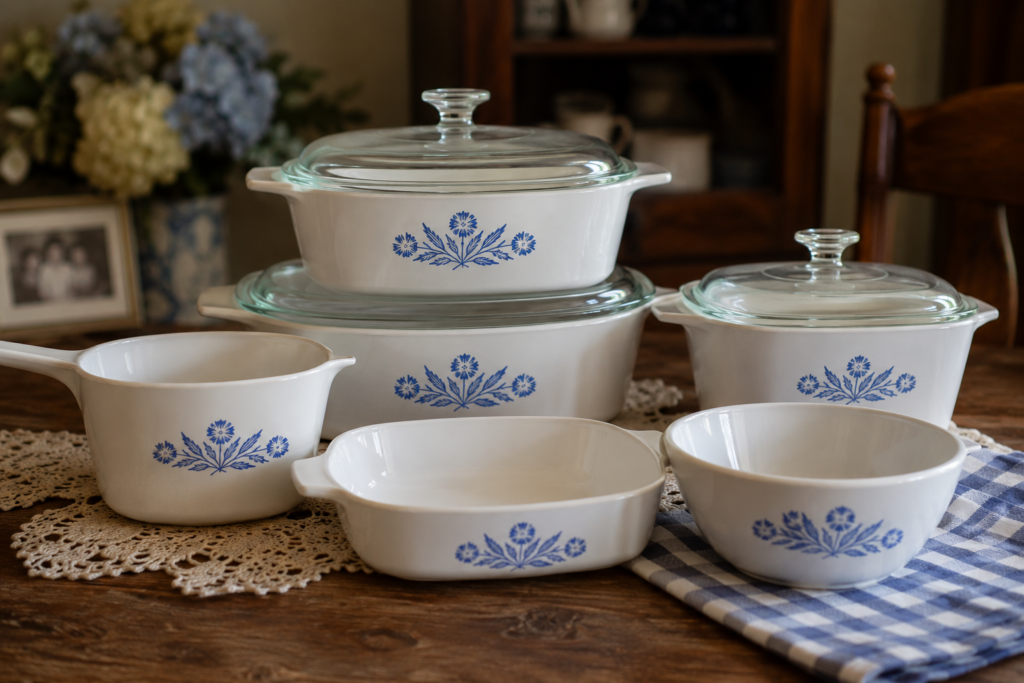
Having grown up in the 1970s and 1980s, I have a special fondness for the harvest colors of that era. I collect Tupperware in shades of orange, brown, yellow, and green. My cabinets hold vintage CorningWare with blue cornflowers and various patterns of Pyrex.
But here’s the thing.
I don’t collect these items just to look at them.
I use them.
The bowls, dishes, storage containers, and cookware are part of everyday life in our home.
To some people, they are simply old things.
To me, they are reminders of people, places, and memories.
The Question That Keeps Me Awake
As I’ve gotten older, I’ve started wondering what will happen to these treasures someday.
Not because my children don’t love me.
They do.
But their homes are different. Their tastes are different. Their lives are different.
And honestly, I don’t expect them to want everything I have.
What makes me sad is the possibility that they won’t know the stories.
Because without the stories, a knockdown cabinet is just a wardrobe/armoire.
A mantle is just a piece of wood.
A bowl is just a bowl.
The history disappears.
My children didn’t know my grandparents the way I did. They weren’t sitting around family tables hearing stories. They don’t have the memories attached to these objects that I carry with me every day.
And that leaves me wondering:
How do you preserve family stories when the next generation isn’t particularly interested in hearing them right now?
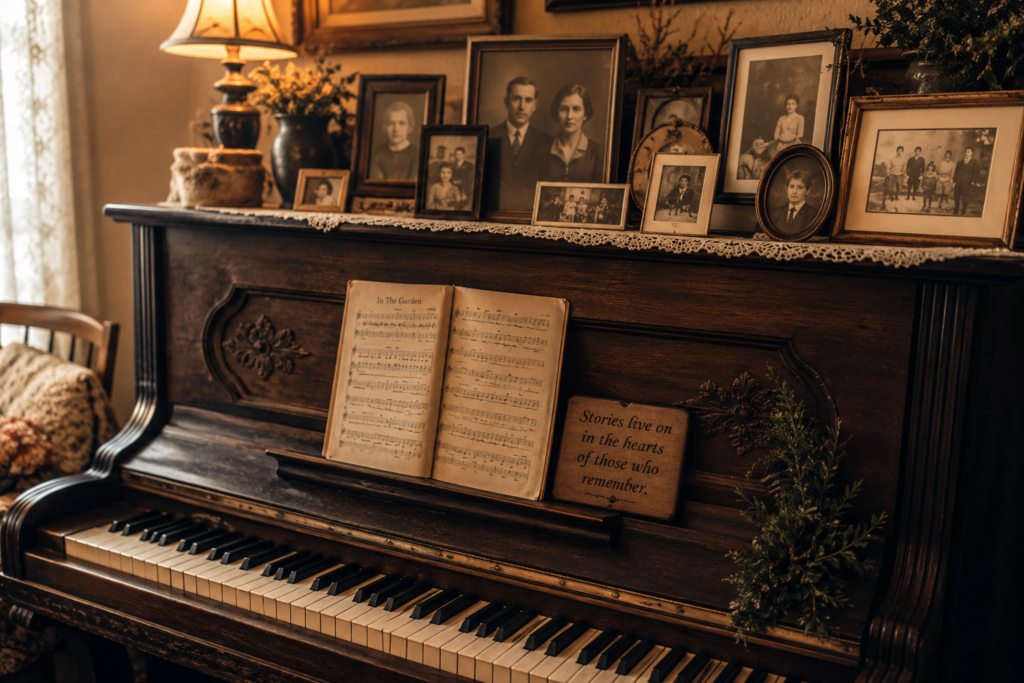
Maybe they will be someday.
Maybe years from now one of my grandchildren will open a drawer, pick up an old photograph, or inherit a piece of furniture and suddenly want to know where it came from.
Will the story still be there waiting for them?
The Stories Matter More Than the Things
That’s why I ordered the plaque for the knockdown cabinet.
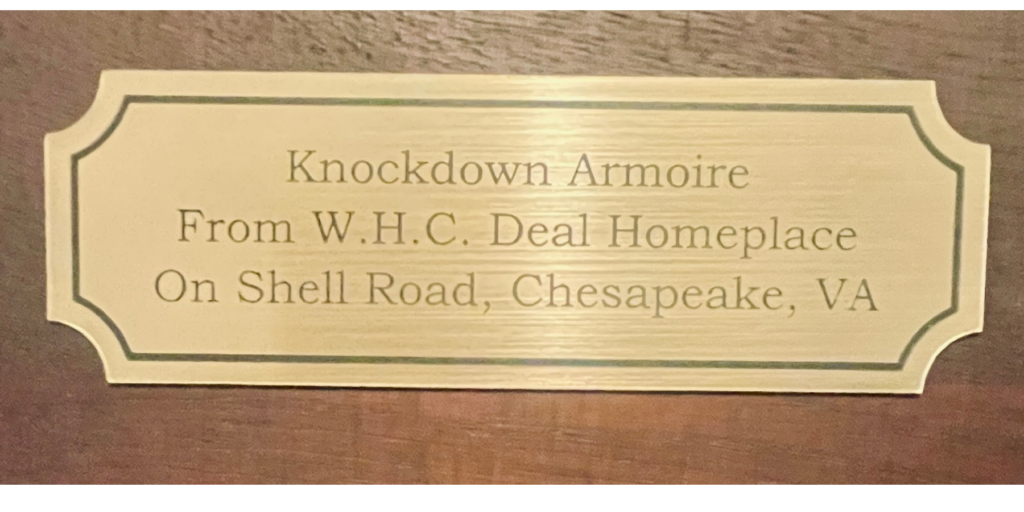
If the cabinet someday leaves our family, perhaps someone will open the door and read its story.
Maybe they’ll learn about the Deal family from Deep Creek, Virginia.
Maybe they’ll learn what a knockdown cabinet is.
Maybe they’ll realize that the old piece of furniture standing in their home once stood in a farmhouse generations ago.
Most importantly, maybe they’ll understand that someone cared enough about its history to preserve it.
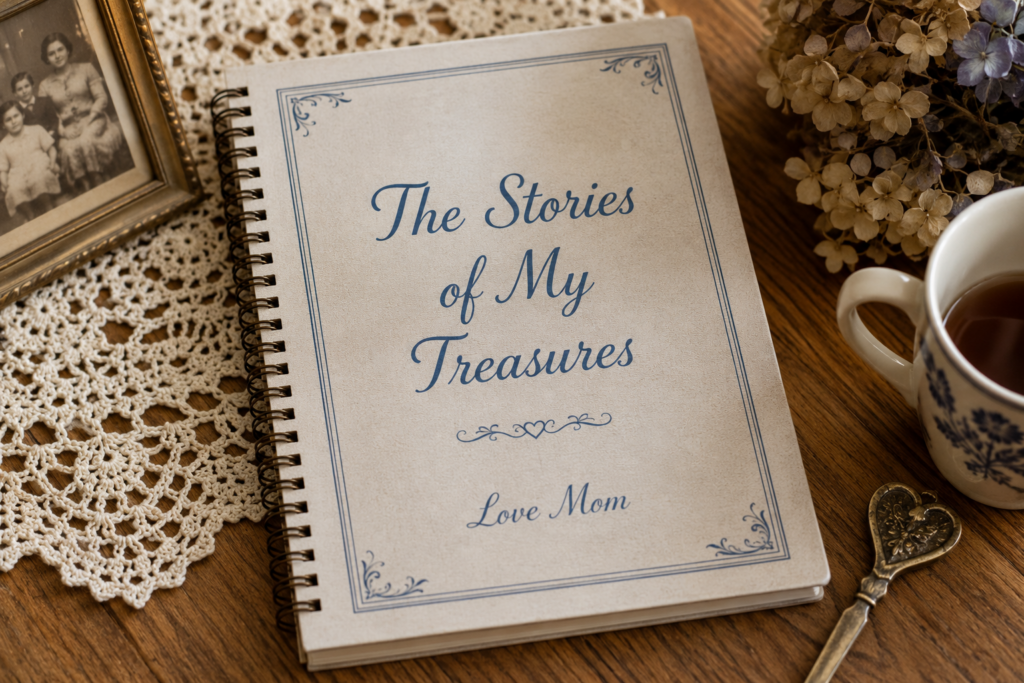
Lately I’ve been thinking about other ways to preserve stories too.
Perhaps it’s a family history binder filled with photographs and memories.
Perhaps it’s labels attached discreetly to treasured objects.
Perhaps it’s a legacy journal or a collection of letters written for future generations.
Perhaps it’s recording stories on video while we still can.
I don’t know exactly what the answer is.
But I do know this:
The stories matter more than the things.
The objects are simply the vessels.
The real treasure is the history, the memories, the people, and the love attached to them.
Maybe preserving family stories isn’t really about preserving the past.
Maybe it’s about leaving breadcrumbs for the future.
Small clues that help future generations understand who they are, where they came from, and the people who loved them long before they arrived.
Because one day, when we’re no longer here to tell the stories ourselves, those stories may become the greatest inheritance we leave behind.
And perhaps that’s the real legacy—not the cabinet, the mantle, the dishes, or the furniture.
It’s the story.

About the Author
Sherri holds an AA in Anthropology, a BA in History and Religious Studies from Albright College, and an MA in Ministry Leadership from Capital Seminary & Graduate School. She is the founder of Chicks on the Road Publishing, where she creates faith-filled resources designed to encourage women in their walk with Christ, their homes, and their family legacy.
Through storytelling, Bible studies, journals, devotionals, and memory-keeping projects, Sherri hopes to inspire others to live intentionally, preserve what matters most, and pass their faith to the next generation.
Creating from anywhere. Encouraging everywhere.