

May 21, 2000 | 1 Chronicles 21-22
Several years ago, my dad asked me what I wanted for Christmas.
My answer surprised him.
I didn’t ask for jewelry, a gift card, or something wrapped in festive paper. Instead, I asked for something that had been quietly accumulating over decades—his Sunday School lessons.

For years, Dad faithfully taught God’s Word. Week after week, he sat down with his Bible, commentaries, notebooks, and a sharp pencil to prepare lessons for the people in his class. He wasn’t a pastor. He wasn’t a seminary professor. He was simply a “country boy” who loved God, loved Scripture, and felt called to teach.
Thankfully, he said yes.
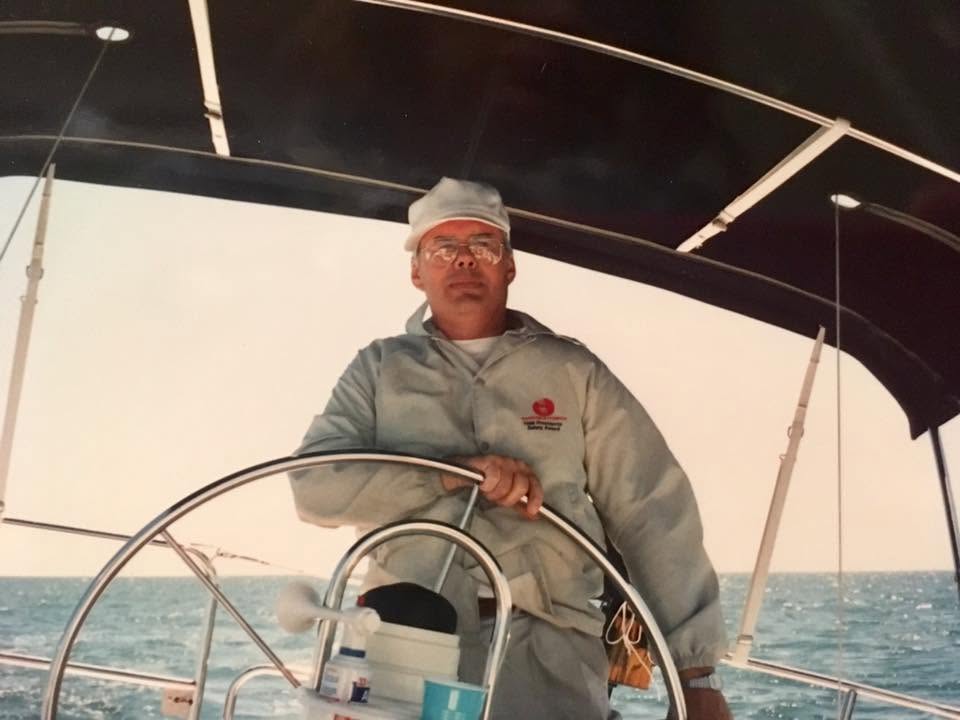
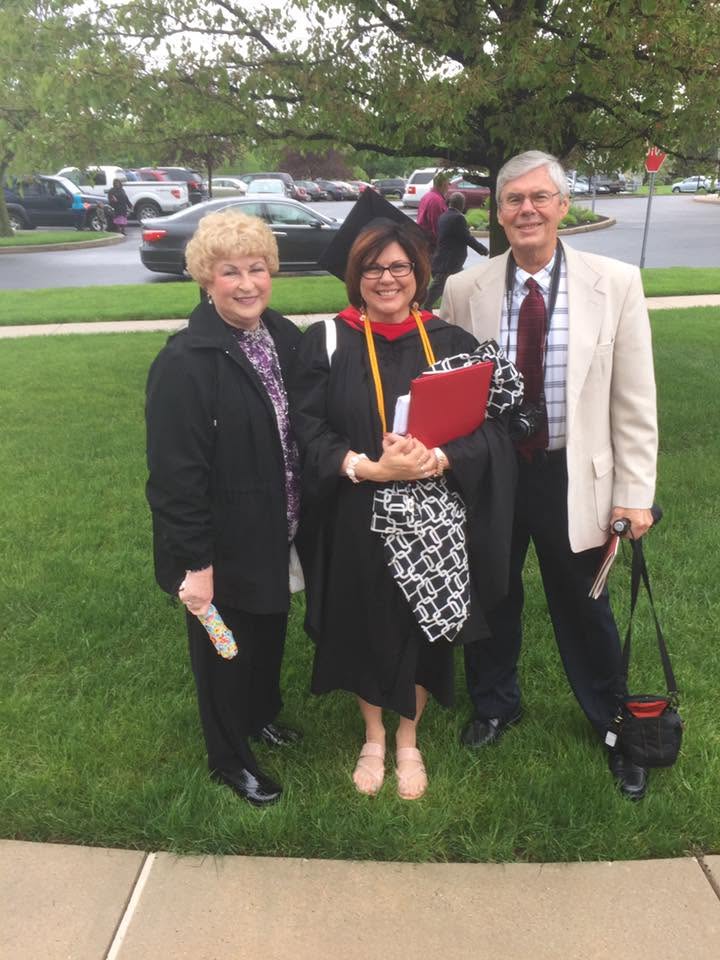
Lessons after the year 2000 were written on his computer, and today I have the privilege of serving as the custodian of that collection. Hundreds of pages. Decades of teaching. A lifetime of faith preserved in words.
Since losing Dad, I’ve returned to those lessons often.
Sometimes I’m looking for wisdom.
Sometimes I’m looking for encouragement.
And sometimes I simply miss hearing his voice.
What I’ve discovered is that the lessons themselves are only part of the gift. Hidden between the outlines, Scripture references, and teaching points are pieces of the man who wrote them. His humor. His humility. His practical way of looking at life. His ability to connect God’s Word to the everyday experiences of ordinary people.
This series, The Stories You Gave Me: From the Sacred Hearth, is my way of sharing those lessons and preserving the legacy they contain.
One detail about this series is especially meaningful to me. The handwriting in the logo comes from a birthday card Dad once gave me. At the bottom of the card, he signed two simple words: Love, Dad.
Every time I look at that logo, I see his handwriting.
And every time I open one of these lessons, I hear his voice.
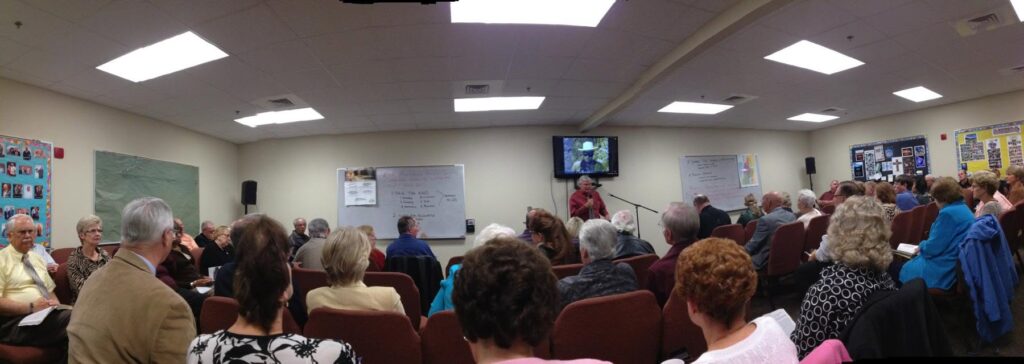
Today’s lesson was taught on May 21, 2000. Dad titled it Offer Devoted Service, and he based it on 1 Chronicles 21 and 22.
As I read through the pages, I could almost picture him standing in front of his class.
And, true to form, he didn’t begin with King David.
He began with a baseball glove.
Dad loved using everyday objects to make a point.
On this particular Sunday morning, he brought a baseball glove to class.
Baseball season was underway, and he began by sharing a little about his own athletic career—or lack thereof.
“I played sandlot baseball and was on our church team as a teenager,” he wrote. “But unlike some other folks you know, I was never any good at it.”
That self-deprecating humor shows up throughout his lessons. He never tried to impress people. He didn’t present himself as an expert. If anything, he often made himself the punchline.
Then he asked a question.
What do outfielders do during a game when the pitcher throws a no-hitter?
His answer was simple.
They wait.
They shift their feet.
They slap their gloves.
They chatter back and forth.
They stay alert.
Most importantly, they stay ready.
They may never touch the ball all game long, but if the ball suddenly comes their way, they need to be prepared.
Then Dad set the glove aside and picked up a basketball.
Unlike baseball, he explained, basketball depends heavily on teamwork. One player cannot carry an entire team. Everyone has a role. Success depends on players working together toward a common goal.
At this point, he introduced one of the biggest sports figures of the day: Michael Jordan.
Dad admired Jordan’s determination and commitment. He reminded his class that Jordan had become a champion not simply because of talent but because of his willingness to push himself, persevere through challenges, and give his best effort every time he stepped on the court.
Then came the question that formed the heart of the lesson:
“What drives you and I today in our service to God? Are we driven to do our very best no matter what? Are we willing to stay in the game when we have difficulty? Are we willing to push ourselves when we don’t feel like it?”
From sports, Dad moved naturally into Scripture.
And there he introduced a man who understood devotion better than most.
King David.
By the time we reach 1 Chronicles 21 and 22, David is nearing the end of his life.
His kingdom is established.
His battles have largely been fought.
His legacy is already secure.
Yet David still carries a dream in his heart.
He wants to build a temple for God.
For years, the Ark of the Covenant had been housed in a tent. David longed to build a permanent sanctuary that would honor the Lord.
But God had other plans.
Because David had been a man of war, God told him he would not be the one to build the temple.
That responsibility would belong to his son Solomon.
Imagine hearing that news.
You have the vision.
You have the experience.
You have the leadership.
You have the passion.
And yet someone else will be given the opportunity to complete the work.
Dad spent a significant portion of the lesson exploring David’s response.
What impresses him isn’t what David built.
It’s what David did after learning he wouldn’t be the builder.
David didn’t become resentful.
He didn’t step away.
He didn’t decide that if he couldn’t have the credit, he wasn’t interested in helping.
Instead, he devoted himself to preparing the way.
He gathered materials.
He secured resources.
He developed plans.
He organized everything Solomon would need.
In fact, Dad pointed out that although history remembers it as Solomon’s Temple, David was the true architect behind the vision.
Then came one of my favorite moments in the lesson.
Trying to help his class appreciate the challenge David faced, Dad wrote:
“Speaking from experience it is bad enough to sit on the bench while others play in the actual game. But in this case it would be like asking Michael Jordan to sit on the bench while Michael J. Fox plays in the game.”
Only my dad could move from King David to Michael Jordan and Michael J. Fox in the same paragraph.
But everyone in that room would have remembered the point.
David had every qualification.
Yet God called him to prepare instead of perform.
And David accepted that assignment faithfully.
At this point in the lesson, Dad shifted from David’s story to one of his own.
Dad worked for Dominion Energy (formerly VEPCO). Earlier that year, a fire had destroyed equipment at one of the electrical substations. The damage totaled millions of dollars, and he was assigned to help coordinate the restoration effort.
Dad held the title of Project Manager.
His job wasn’t to climb poles or repair equipment.
His responsibility was to organize people, create plans, solve problems, and make sure everyone had what they needed to succeed.
As he explained to his class:
“My best means that others have the tools they need to get the job done.”
When I read that sentence today, I can’t help but pause.
Because it feels like more than a description of his job.
It feels like a description of his life.
Dad spent years giving people tools.
Tools for understanding Scripture.
Tools for navigating challenges.
Tools for serving faithfully.
Tools for living well.
Long before I inherited his lessons, I inherited those tools.
And perhaps that is why this particular lesson feels so personal.
David prepared the way for Solomon.
Dad spent much of his life preparing the way for others.
And now, years later, through these lessons, he is still doing it.
Dad concluded the lesson with a challenge from 1 Chronicles 22:19:
“Now devote your heart and soul to seeking the Lord your God.”
For him, devoted service was never about recognition.
It wasn’t about titles.
It wasn’t about applause.
It was about faithfulness.
Whether you’re the outfielder waiting for the ball, the player sitting on the bench, the project manager organizing the work, or the king gathering materials for a temple you will never see completed, your responsibility remains the same.
Do your best.
Stay ready.
Seek the Lord.
And faithfully carry out the role He has given you.
What Stayed With Me
As I finished reading this lesson, I found myself thinking about the title of this series.
The Stories You Gave Me.
This lesson is one of those stories.
Not simply because Dad taught it.
But because he lived it.
He prepared the way.
For his students.
For his church.
For his children, his grandchildren – and for his great-grandchildren that he would never meet.
And perhaps that’s the greatest legacy any of us can leave behind—not simply what we build ourselves, but what we make possible for those who come after us.
That’s the story Dad gave me.
And it’s one I’ll continue to carry forward.

About the Author
Sherri holds an AA in Anthropology, a BA in History and Religious Studies from Albright College, and an MA in Ministry Leadership from Capital Seminary & Graduate School. She is the founder of Chicks on the Road Publishing, where she creates faith-filled resources designed to encourage women in their walk with Christ, their homes, and their family legacy.
Through storytelling, Bible studies, journals, devotionals, and memory-keeping projects, Sherri hopes to inspire others to live intentionally, preserve what matters most, and pass their faith to the next generation.
Creating from anywhere. Encouraging everywhere.