
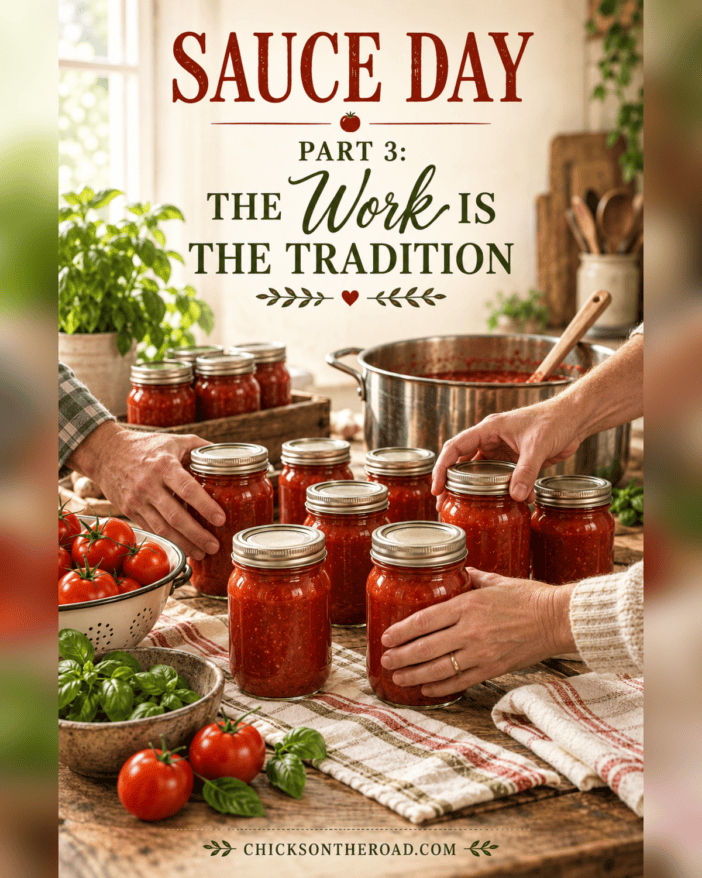
When I first imagined a family Tomato Sauce Day, I pictured all of us gathered in the kitchen, working together and turning a summer’s worth of tomatoes into jars we could enjoy throughout the year.
Family Tomato Sauce Day Series
What began with an 11-gallon bag of tomatoes became our first family Sauce Day—and perhaps the beginning of a new tradition. Follow the full story:
That is essentially what happened.
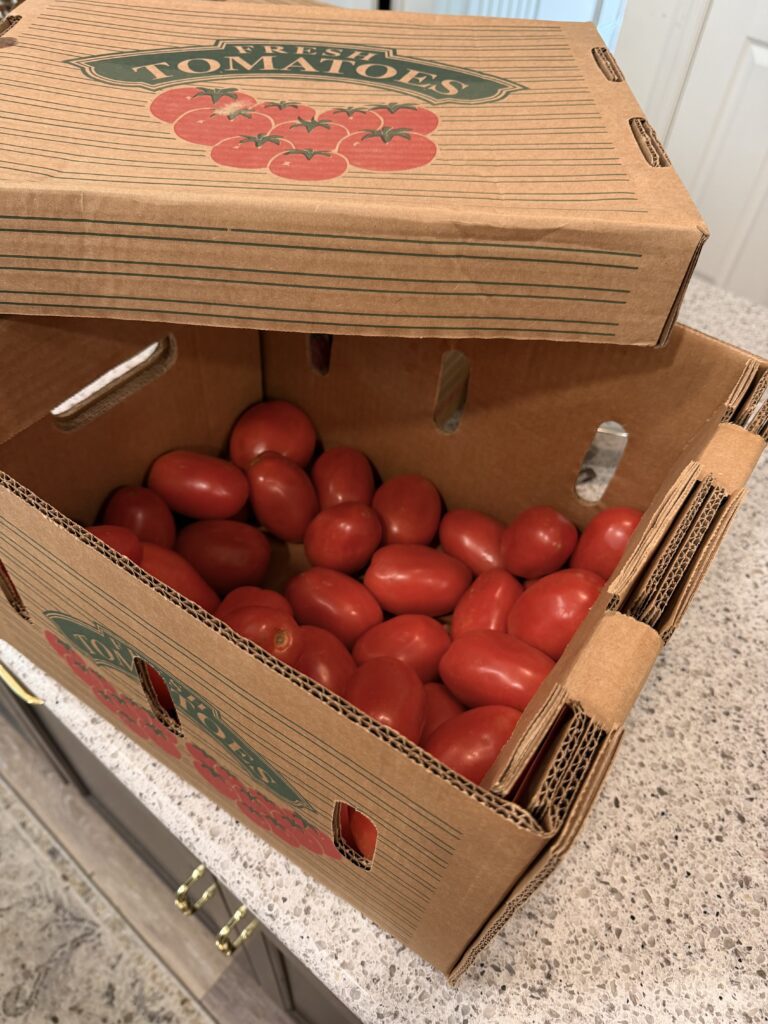
Our first Sauce Day was not perfectly planned or leisurely paced. It was busy, messy, and a little rushed.
It was also exactly the kind of day I had hoped we would create.
How a Tomato Sauce Day Works
A Tomato Sauce Day is really a collection of small jobs that eventually produce something wonderful.
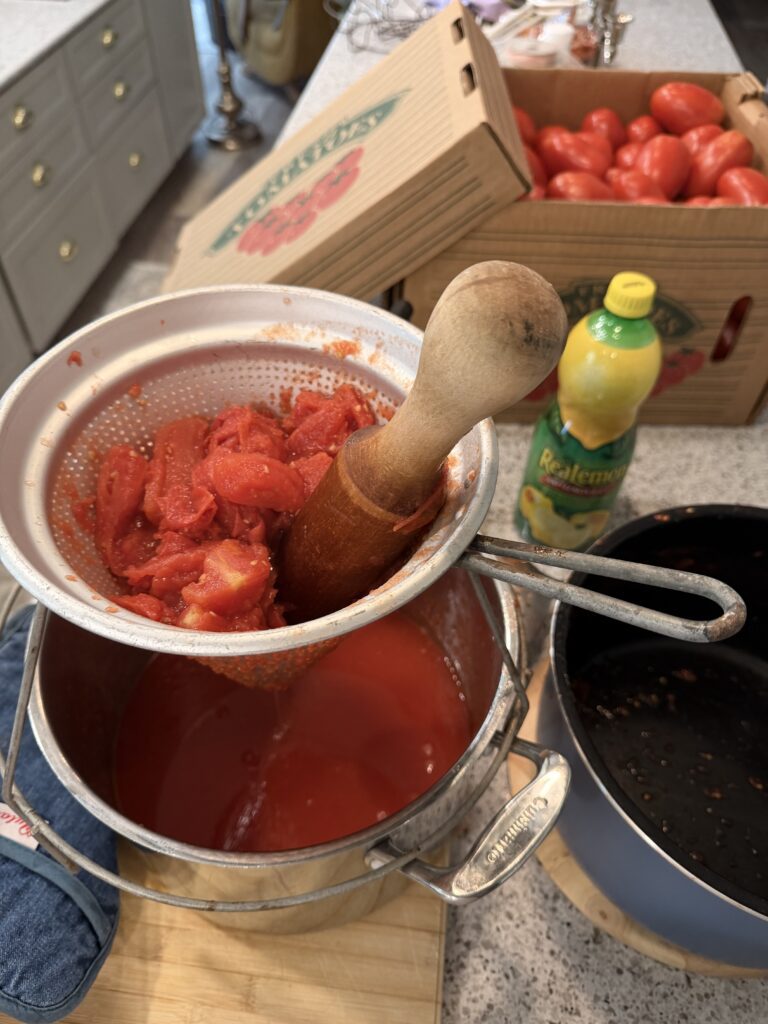
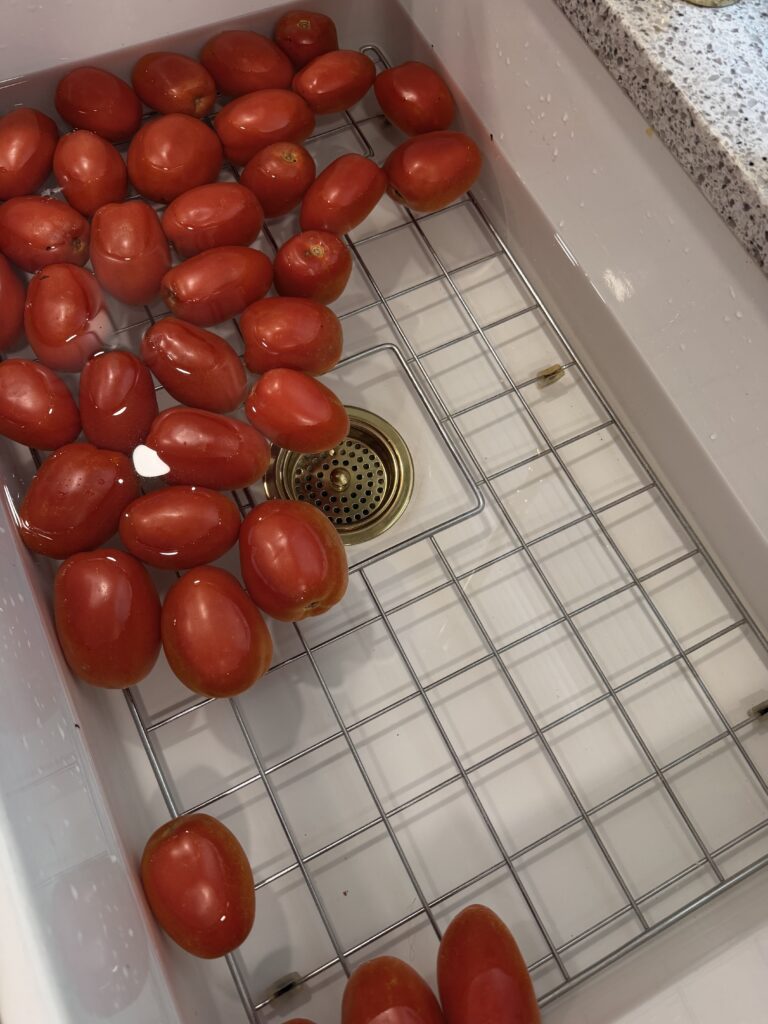
The tomatoes must be washed, blanched, peeled, cooked until soft, and put through a food mill. The sauce then goes back into the pot to cook down until it reaches the desired consistency. Meanwhile, the jars and canning equipment must be prepared. Once the sauce is ready, the jars are filled and processed in water-bath canners according to a tested canning recipe.
Some families do every step on the same day. We did not.
Our tomatoes came from my daughter Ally’s garden throughout the summer. As they ripened, I blanched them, removed the skins, packed them into gallon bags, and froze them. That meant much of the preliminary work was already finished before Sauce Day arrived.
Once the tomatoes were thawed, we drained away the water that had separated from the tomato flesh during freezing. This turned out to be a tremendous advantage. Removing that excess liquid considerably reduced the amount of time required to cook the sauce down.
We processed the tomatoes, cooked the sauce, filled the jars, and used two electric water-bath canners to process them. Ally’s gas stove gave us the space and flexibility we needed for the large pots.
By the end of the day, eleven gallon bags of tomatoes had become fourteen quart jars of homemade tomato sauce.
Everything Is Better With More Hands
Tomato sauce can certainly be made alone, but I no longer think that is the best way to do it.
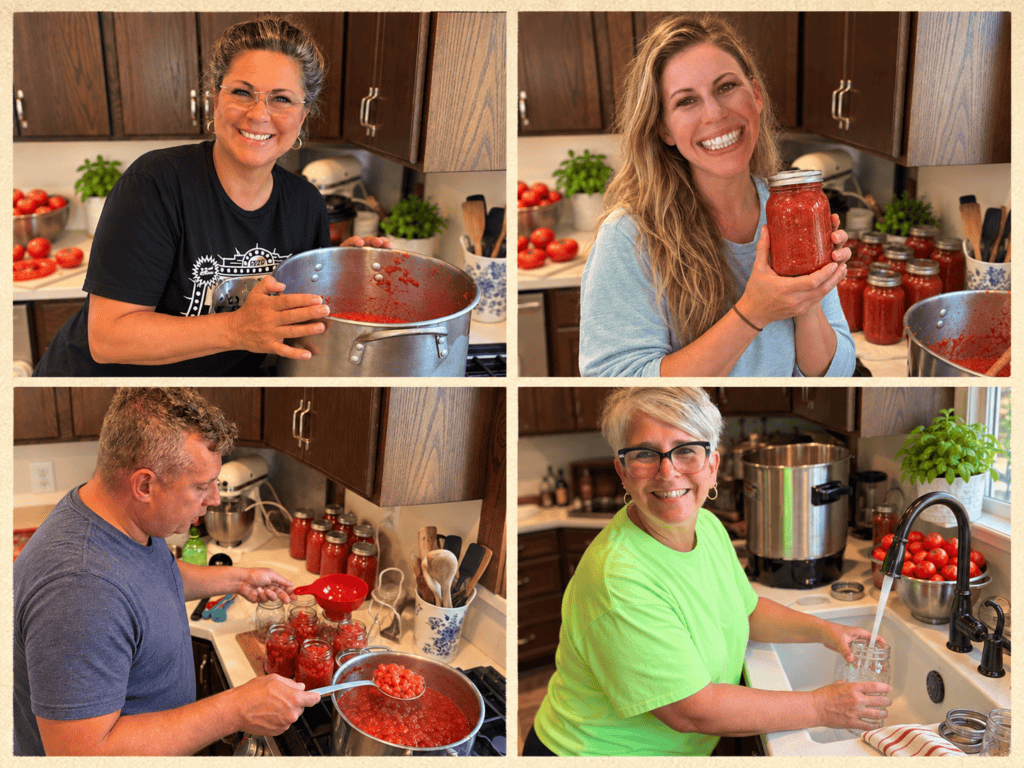
My daughter Ally, her husband Josh, Josh’s mother Lorraine, and I all worked together. We did not assign everyone a permanent job. We simply moved to whatever needed to be done next.
Someone stirred the pot while someone else worked with the food mill. Someone prepared jars, watched the canners, cleaned a counter, or found the next utensil we needed.
At the same time, we were all helping with Ally and Josh’s four children.
That meant the work did not happen in a neat, uninterrupted line. Someone might leave the tomatoes to help a child and then return to a completely different task. We traded places, filled the gaps, and kept the whole operation moving.
Working together made the job easier, but that was not the most important part.
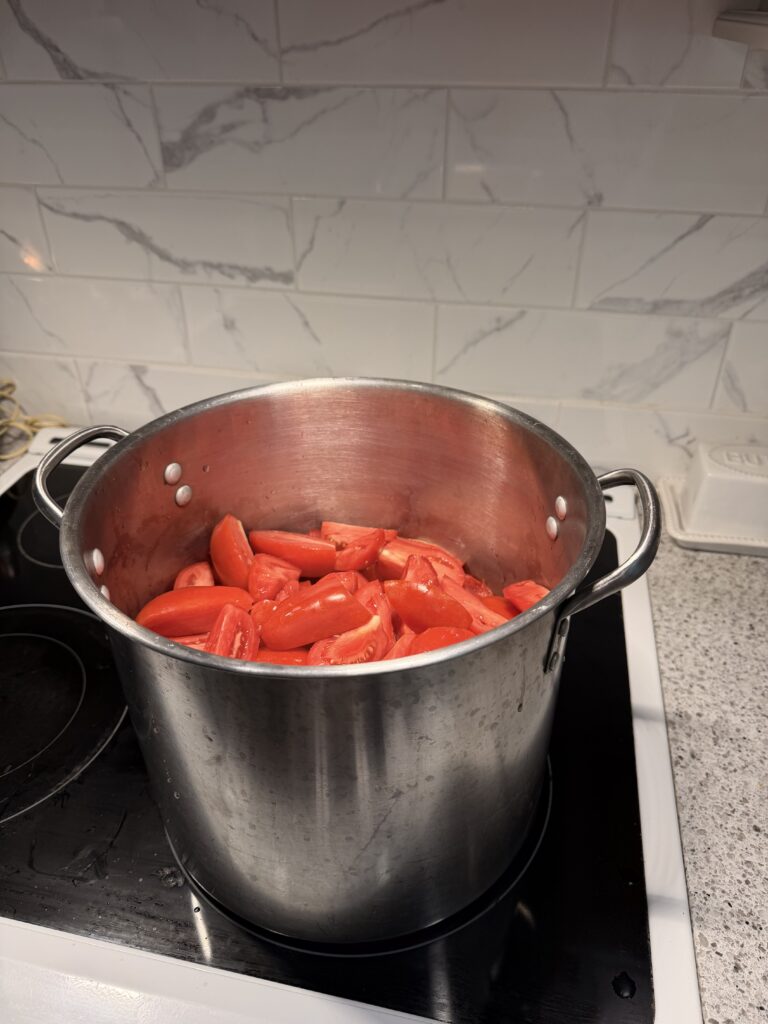
The best part was that we were doing it together.
There was conversation in the middle of the work. There were children coming in and out of the kitchen. There were questions, interruptions, laughter, sticky counters, and people stepping in when another pair of hands was needed.
That is what transforms an ordinary kitchen project into a family memory.
Plan Farther Ahead Than You Think
Here is where I must say: don’t plan this part the way I did.
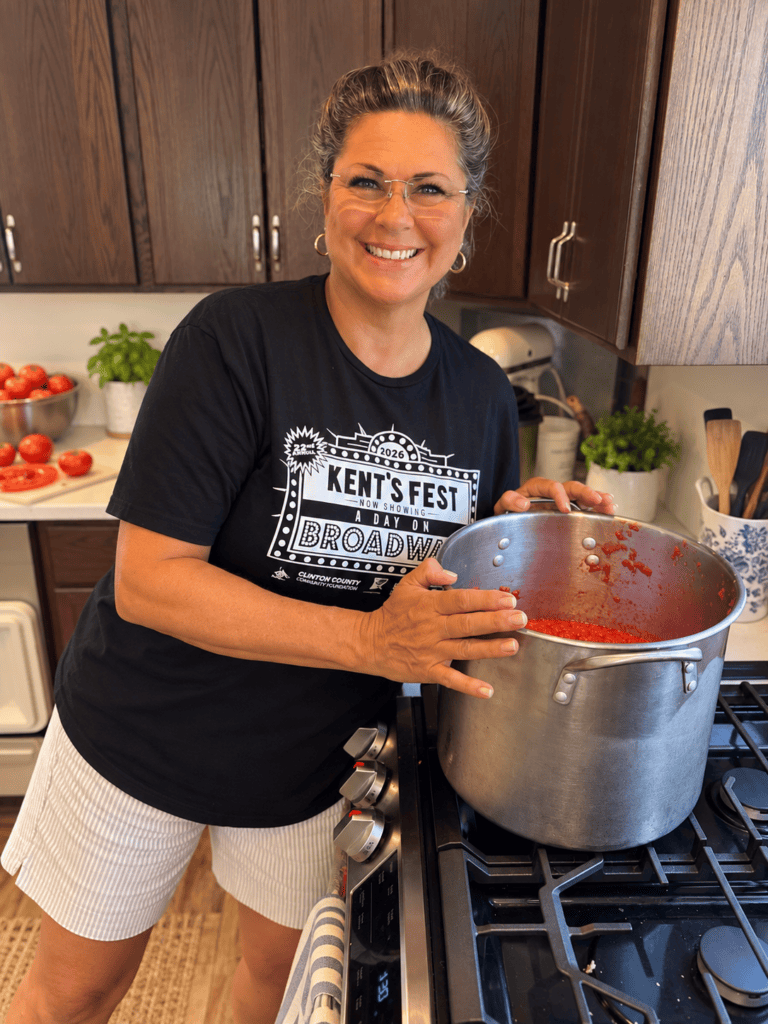
Freezing the tomatoes throughout the summer was a good decision. Blanching and peeling them before freezing saved us a considerable amount of work on Sauce Day. Draining the liquid that separated during thawing also shortened the cooking time.
The problem was that I underestimated how long eleven gallon bags of tomatoes would take to thaw.
The bags filled two insulated coolers. We kept them safely chilled with ice packs, but even after nearly two full days, the tomatoes were only almost thawed.
I had imagined that thawing would be a simple preliminary step. Instead, it changed our entire schedule.
We had to move Sauce Day at the last minute. The replacement date worked, but it was far from ideal. Each of us had a separate commitment that evening, so our time together was regulated by the clock. We did not have the freedom to let the sauce take as long as it wanted.
Fortunately, draining the separated water helped the sauce cook down faster. Even so, we spent much of the day conscious of how much still needed to be done before everyone had to leave.
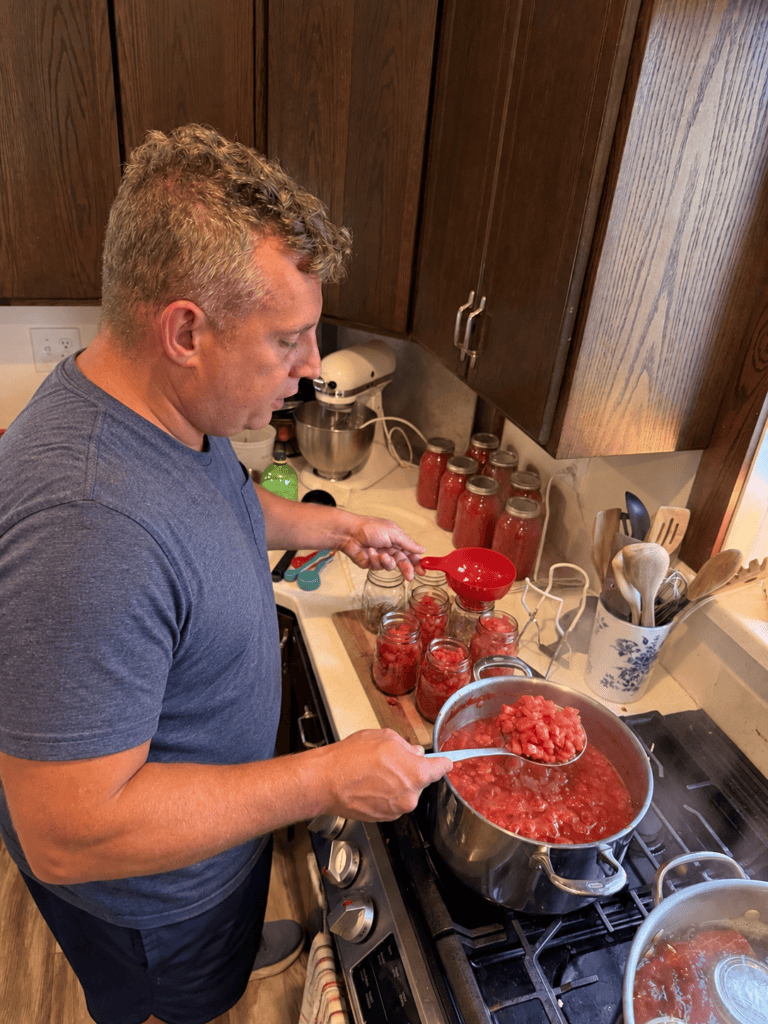
Next year, we will know better.
We will choose the date well in advance. We will protect as much of the day as possible. We will inventory the jars, lids, canners, pots, and tools ahead of time. Most importantly, we will allow considerably more time for that many frozen tomatoes to thaw.
The lesson is not to avoid freezing tomatoes. Freezing them worked beautifully and allowed us to collect Ally’s harvest gradually throughout the summer.
The lesson is to make thawing part of the plan.
Show Up Early and Enjoy the Work
If you want to create your own family Sauce Day, encourage everyone to arrive early—and do not treat the work as something you must hurry through before the fun begins.
The work is the fun.
Wear comfortable clothes. Expect the kitchen to get warm. Prepare for tomato splashes, full counters, and more dishes than you thought you owned. Give everyone a place to begin, but let people move between jobs as the day unfolds.
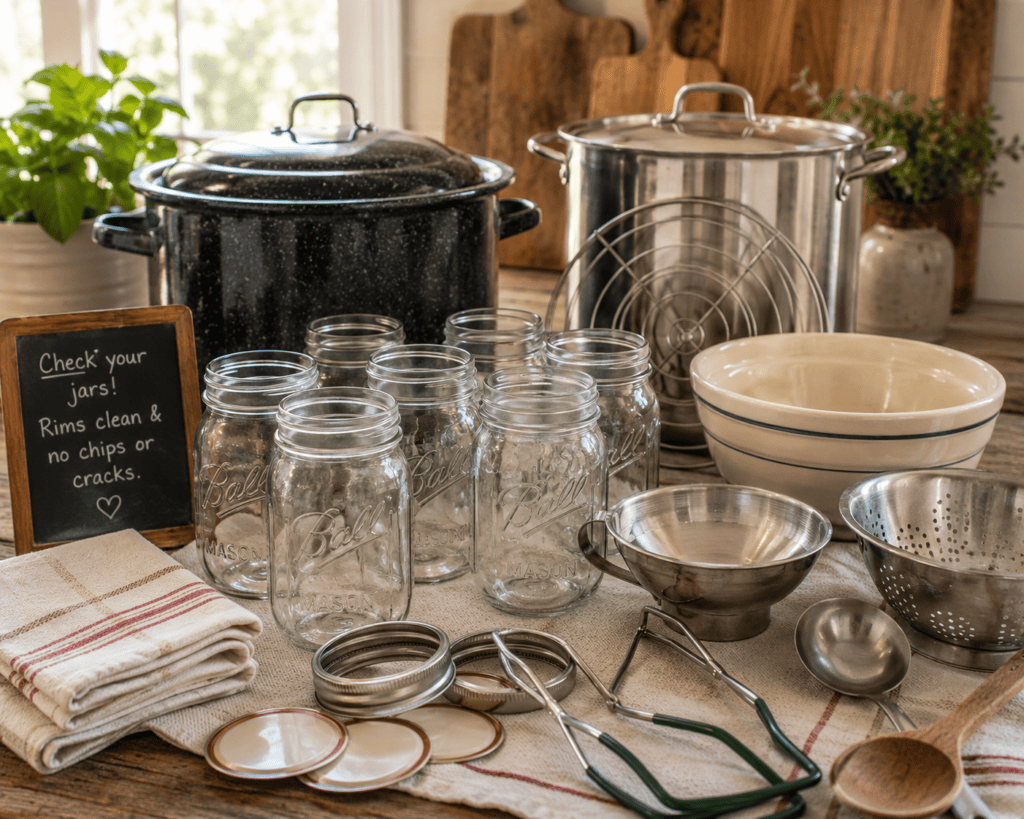
Make room for children and interruptions. Put out food and drinks. Talk while you stir. Laugh when things become messier than expected. Take pictures before everyone is too tired to smile for the camera.
Do not wait until the jars are finished to decide the day was worthwhile.
The blanching, stirring, milling, filling, cleaning, and waiting are not obstacles standing between you and the memory.
They are the memory.
When We Knew It Had Become a Tradition
When we began, I did not know whether our first Tomato Sauce Day would become an annual event.
Fourteen quart jars eventually stood cooling after a long day in Ally’s kitchen. They represented eleven bags of tomatoes, months of garden work, two electric canners, four adults, four children, and a great deal of shared effort.
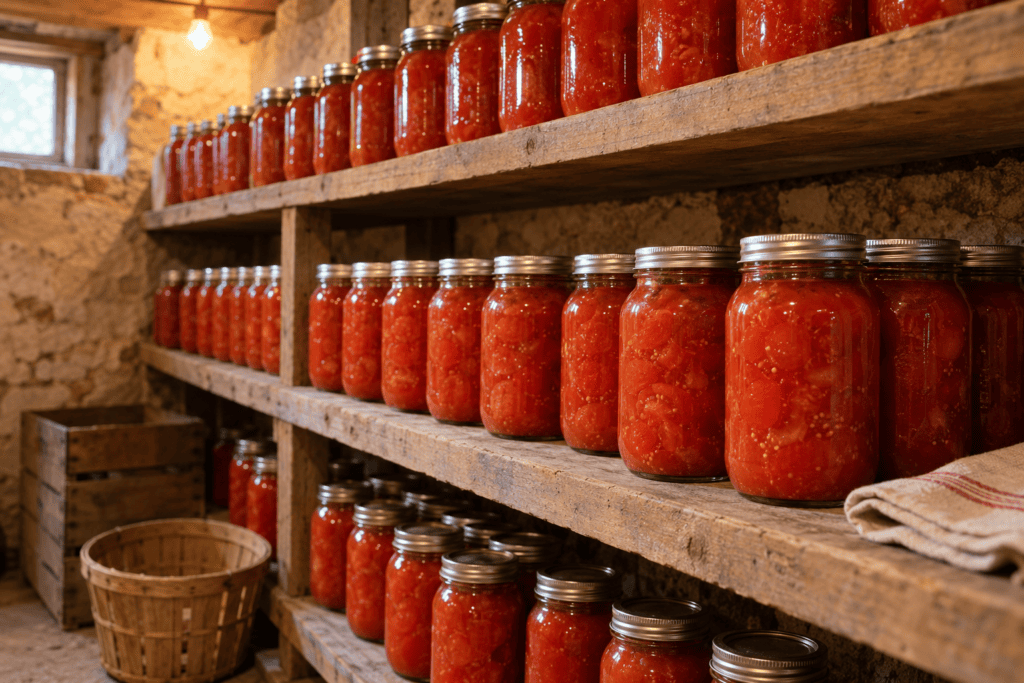
But the clearest sign of success was not the number of jars we produced.
Before our first Sauce Day was even completely over, we were already discussing how large Ally’s tomato garden should be next year.
We were not debating whether we would do it again.
We were planning how to do more.
That is how I knew we had created what I had hoped for from the beginning.
We had made tomato sauce, certainly. But somewhere between the thawing coolers, the bubbling pots, the children, the ticking clock, and those fourteen jars, we had also made a family tradition.
The work was never merely the way we reached the finished product.
The work was the journey—and the journey was the whole point.
Download a Free Family Tomato Sauce Day Printable – click the photo
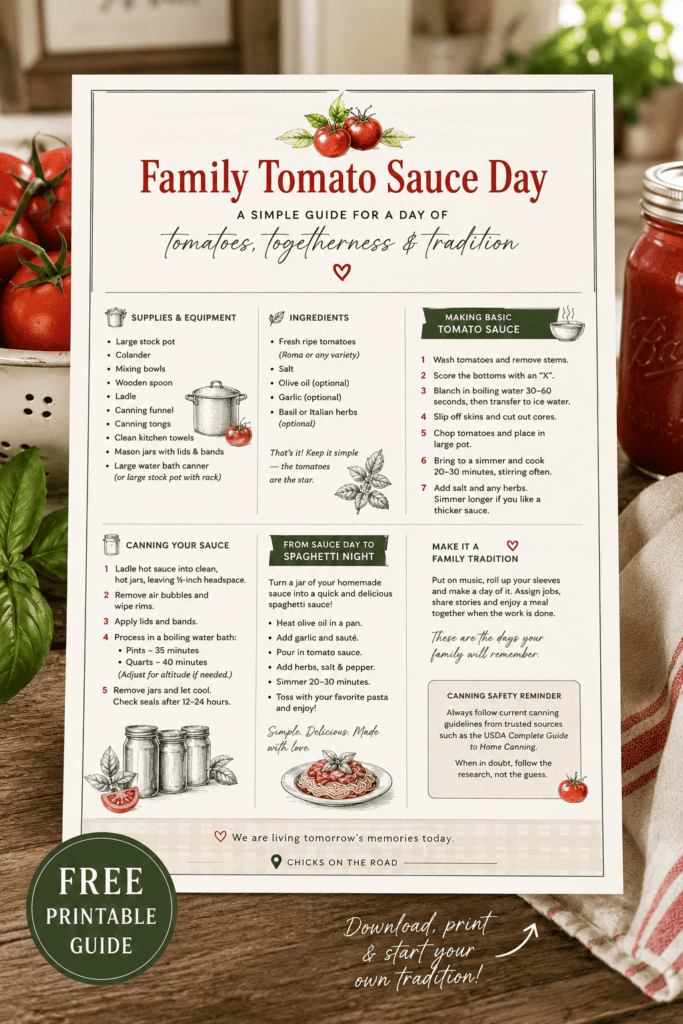
Print it, tuck it into your recipe binder, and make it your own.
A Note About Canning Safety: The canning information in this resource is based on research-tested home food preservation guidance from the National Center for Home Food Preservation and USDA. Home-canning recommendations can change and processing requirements may vary based on jar size, canning method, and elevation. Always review and follow the current official instructions before canning.


About the Author
Sherri holds an AA in Anthropology, a BA in History and Religious Studies from Albright College, and an MA in Ministry Leadership from Capital Seminary & Graduate School. She is the founder of Chicks on the Road Publishing, where she creates faith-filled resources designed to encourage women in their walk with Christ, their homes, and their family legacy.
Through storytelling, Bible studies, journals, devotionals, and memory-keeping projects, Sherri hopes to inspire others to live intentionally, preserve what matters most, and pass their faith to the next generation.
Creating from anywhere. Encouraging everywhere.
Leave a Reply