
Scripture: 1 Corinthians 12:12-27
Dad’s Lesson Date: July 18, 1999
(If you have not read the explanation behind the devotional series, “The Stories You Gave Me”, click here for the back story.)
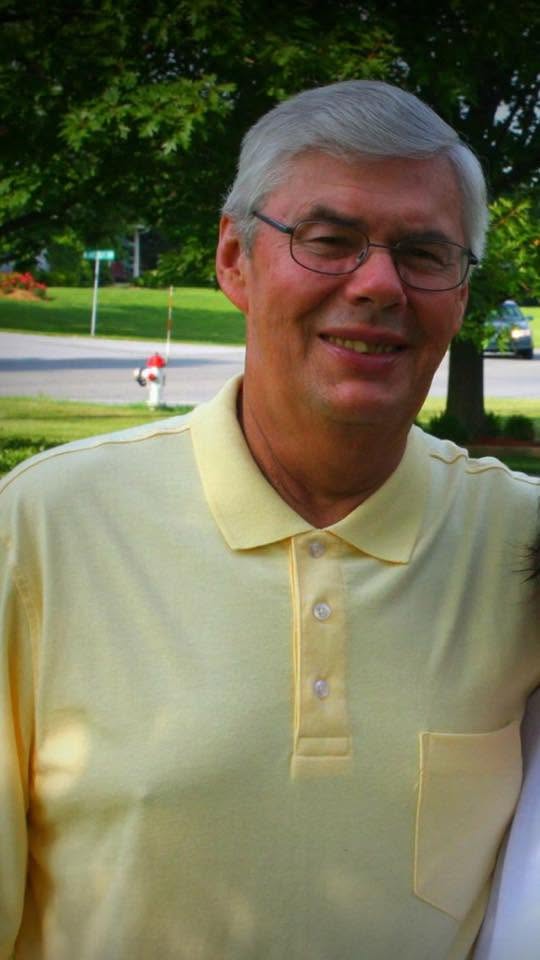
Roger Hamrick (my dad) had a gift for taking everyday objects and turning them into life lessons.
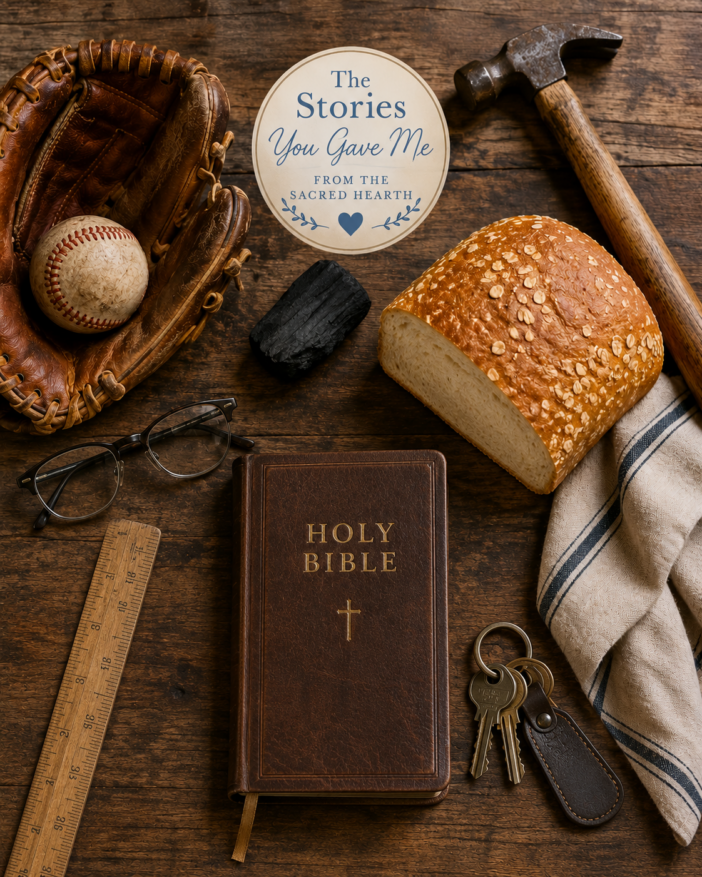
A baseball glove. A hammer. A piece of charcoal. A loaf of bread. A chemical that smelled so bad it had been outlawed years before.
When he taught Sunday School, he rarely stood behind a podium and simply lectured. He had a stool that he would sit down on or he would stand and pace around the podium. He invited people into the lesson through stories, questions, humor, and practical illustrations. I loved to sit in on his classes and hear his stories, which I affectionately called his “farm stories.” He grew up on a farm in Shelby, North Carolina. That’s pretty southern, y’all! “What’s the farm story today, Dad?” I would ask. And it was always something weird and random.
He wanted Scripture to feel real—to connect with the lives people were actually living on Monday morning.
In July of 1999, Dad walked into class carrying a loaf of bread.
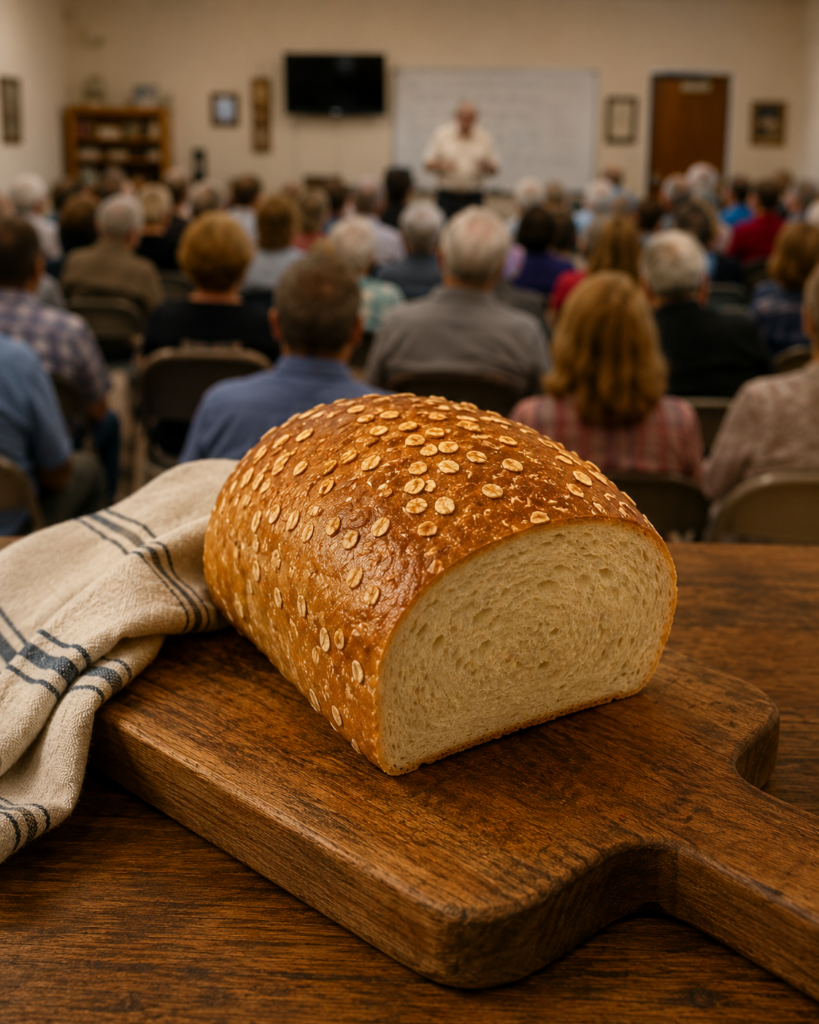
At first glance, it seemed like an unusual prop for a lesson about the church. But as he often did, he used something ordinary to reveal something extraordinary.
His lesson that day centered on a question many Christians still ask:
“Why should I be involved in church?”
His answer wasn’t about filling pews, maintaining programs, or keeping traditions alive.
It was about understanding that God designed His people to belong to one another.
From Dad’s Lesson Notes
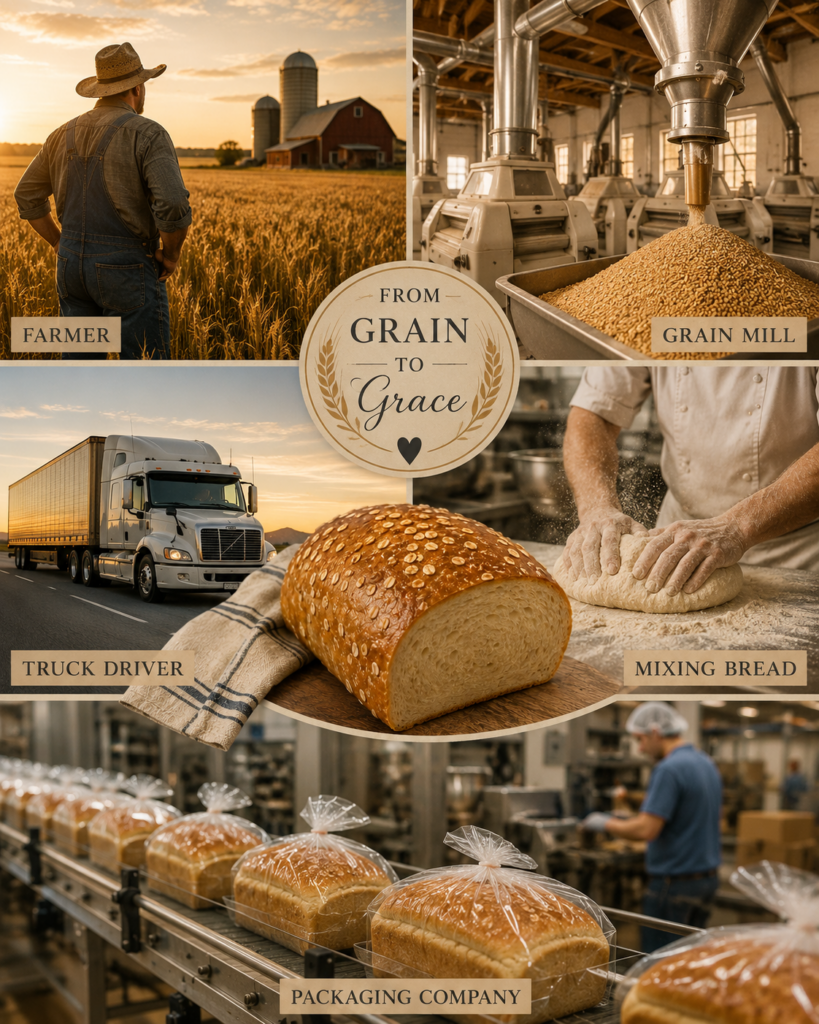
Dad began by holding up the loaf of bread and asking everyone to think about how it arrived on their kitchen table.
He said, “Most of us don’t give much thought to a loaf of bread. We buy it, bring it home, and make sandwiches or toast without ever considering how many people were involved in producing it.” But Dad challenged his class to think deeper.
There was the farmer who planted the wheat.
The grain mill that processed it.
The truck drivers who transported ingredients.
The bakery workers who mixed and baked the bread.
The packaging company.
The grocery store employees who stocked the shelves.
The countless unseen hands that made something so ordinary possible.
Then Dad asked a simple question:
“What part of that process could be removed without affecting the loaf?”
The answer, of course, was none of it.
Every piece mattered.
Every person had a role.
That illustration became the bridge to Paul’s teaching in 1 Corinthians 12, where the Apostle compares the church to a human body.
Paul reminds believers that while we have different gifts, abilities, personalities, and responsibilities, we are still connected. Just as a hand cannot do the work of a foot and an eye cannot do the work of an ear, each person has a unique place within the body of Christ.
Dad explained that the church in Corinth struggled with many of the same issues churches face today. Some believers thought their gifts were more important than others. Some felt overlooked. Others questioned whether they mattered at all.
Paul’s response was clear:
Every member matters.
Every member belongs.
Every member serves a purpose.
Dad shared a story about walking barefoot across his gravel driveway. A tiny splinter became lodged in his heel. It was so small he could barely see it, yet within days his entire body was paying attention to that little piece of wood.
His point was memorable.
When one part of the body hurts, the whole body feels it.

The same is true in the church.
When someone is grieving, we should grieve with them.
When someone is struggling, we should come alongside them.
When someone rejoices, we should celebrate with them.
Church was never meant to be a collection of isolated individuals occupying the same building.
It was designed to be a family.
Dad then challenged his class to consider why the church needs each believer.
People offered answers such as:
- To share the Good News with others.
- To encourage fellow believers.
- To faithfully use God-given gifts.
- To support ministries with time and talents.
- To pray for the church’s direction.
- To contribute through giving.
- To strengthen the witness of the church in the community.
Then he flipped the question.
Why do we need the church?
Again, the answers came quickly:
- To worship God together.
- To learn and grow spiritually.
- To serve others.
- To receive encouragement.
- To build relationships with fellow believers.
- To discover where God wants us to serve.
- To become more like Christ.
One of Dad’s most memorable illustrations involved a hammer.
As a right-handed person, he joked that there were certain jobs that simply felt awkward with his left hand. He waived that hammer around. Churches, he explained, often make the mistake of placing people in positions that don’t fit their gifts.
A faithful Christian may agree to serve out of obligation rather than calling.
The result is frustration for everyone involved.
But Dad believed there was an even greater problem.
Not people accepting the wrong jobs.
People refusing the right ones.
If God has gifted someone to teach, encourage, organize, visit, lead, or serve, then withholding that gift leaves a gap in the body.
God has arranged His people intentionally.
The question is whether we are willing to step into the place He designed for us.
Dad concluded by returning to the loaf of bread.
Just as the bakery carefully assembled every ingredient to create something useful and nourishing, God assembles His people to make an impact on the world.
Every ingredient matters.
Every believer matters.
Every gift matters.
(Dad, you were such a gift!)
What Stayed With Me
As I reread Dad’s lesson nearly three decades later, I am struck by how relevant it remains.
We live in a culture that prizes independence.
We celebrate self-sufficiency and often wear busyness as a badge of honor. It is easy to convince ourselves that we don’t need anyone else—or that what we contribute doesn’t really matter.
Dad’s lesson reminds me that both ideas are false.
We need each other more than we realize.
Looking back over my own life, some of the people who influenced me most were not pastors, authors, or public leaders. They were Sunday School teachers who faithfully showed up each week. Church members who sent cards. Volunteers who worked quietly behind the scenes. Men and women who rarely stood in the spotlight but faithfully served where God placed them.
People very much like my dad.
His life reflected the lesson he taught.
He wasn’t interested in recognition. He wasn’t chasing influence or applause. He simply believed that if God had given him something to do, he should do it faithfully.
That conviction shaped the way he lived and if you had country boy, Roger Hamrick, for a Sunday School teacher, I reckon you were engaged in the lesson just about every week.
His life lessons continues to shape the way I think about community today. I wonder if his class members still think about the things he taught and the illustrations he brought.
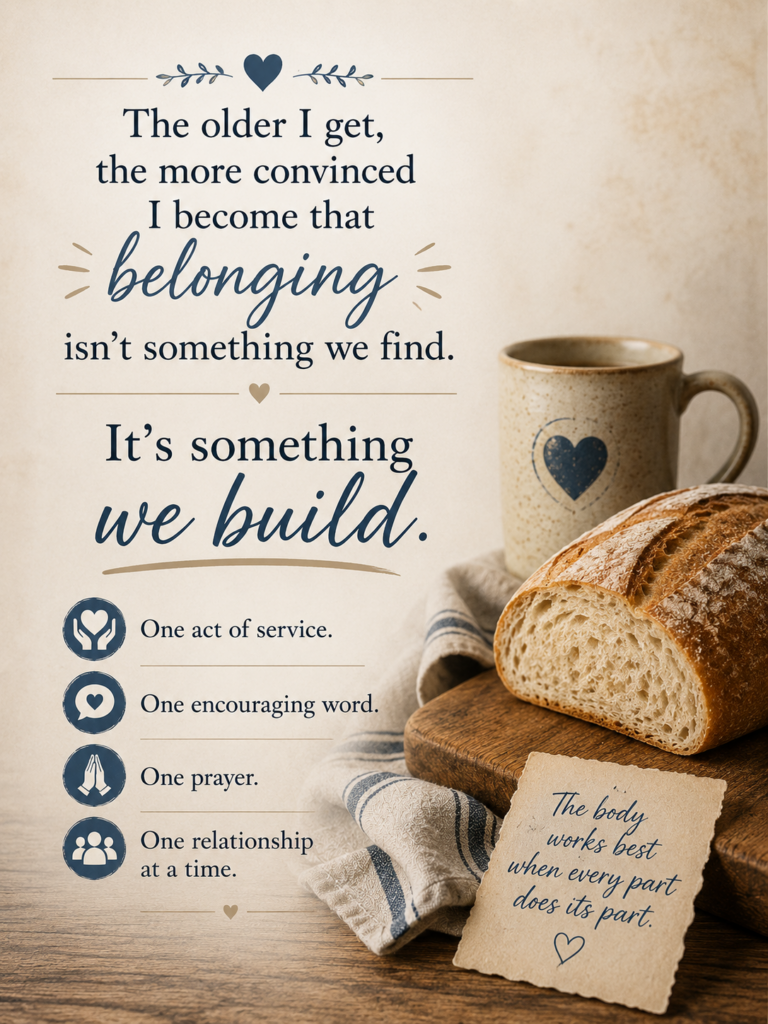
Closing Thought
Dad ended his lesson by asking a simple question:
“What has God arranged for you and me to do in this body, and are we doing it?”
It’s a question worth asking today.
Because somewhere, someone may be waiting for the encouragement only you can give.
Some ministry may be missing the gift only you can bring.
And some part of the body may not function quite the same without you.
Just like the ingredients in a loaf of bread, we were never meant to stand alone.
We were created to become something greater together.

About the Author
Sherri holds an AA in Anthropology, a BA in History and Religious Studies from Albright College, and an MA in Ministry Leadership from Capital Seminary & Graduate School. She is the founder of Chicks on the Road Publishing, where she creates faith-filled resources designed to encourage women in their walk with Christ, their homes, and their family legacy.
Through storytelling, Bible studies, journals, devotionals, and memory-keeping projects, Sherri hopes to inspire others to live intentionally, preserve what matters most, and pass their faith to the next generation.
Creating from anywhere. Encouraging everywhere.
Enjoy this free resource to help you dive deeper into this study.